

Tinnitus: Complete Guide to Causes, Relief & 2026 Treatment Breakthroughs
TL;DR — Key Takeaways - 10-15% of adults experience tinnitus — it's not a disease but a symptom with many possible causes - Know your type: Pulsatile tinnitus (whooshing in sync with heartbeat) has different causes and treatments from non-pulsatile (ringing, buzzing) - CBT (Cognitive Behavioral Therapy) is the most effective treatment — 60-80% distress reduction in clinical trials - 2026 breakthrough: Bimodal neuromodulation shows ~78% improvement rates (Nature Communications, 2025) - From a TCM perspective, tinnitus is often a pattern of Kidney Essence Deficiency (the Kidney opens into the ears) or Liver Fire Rising
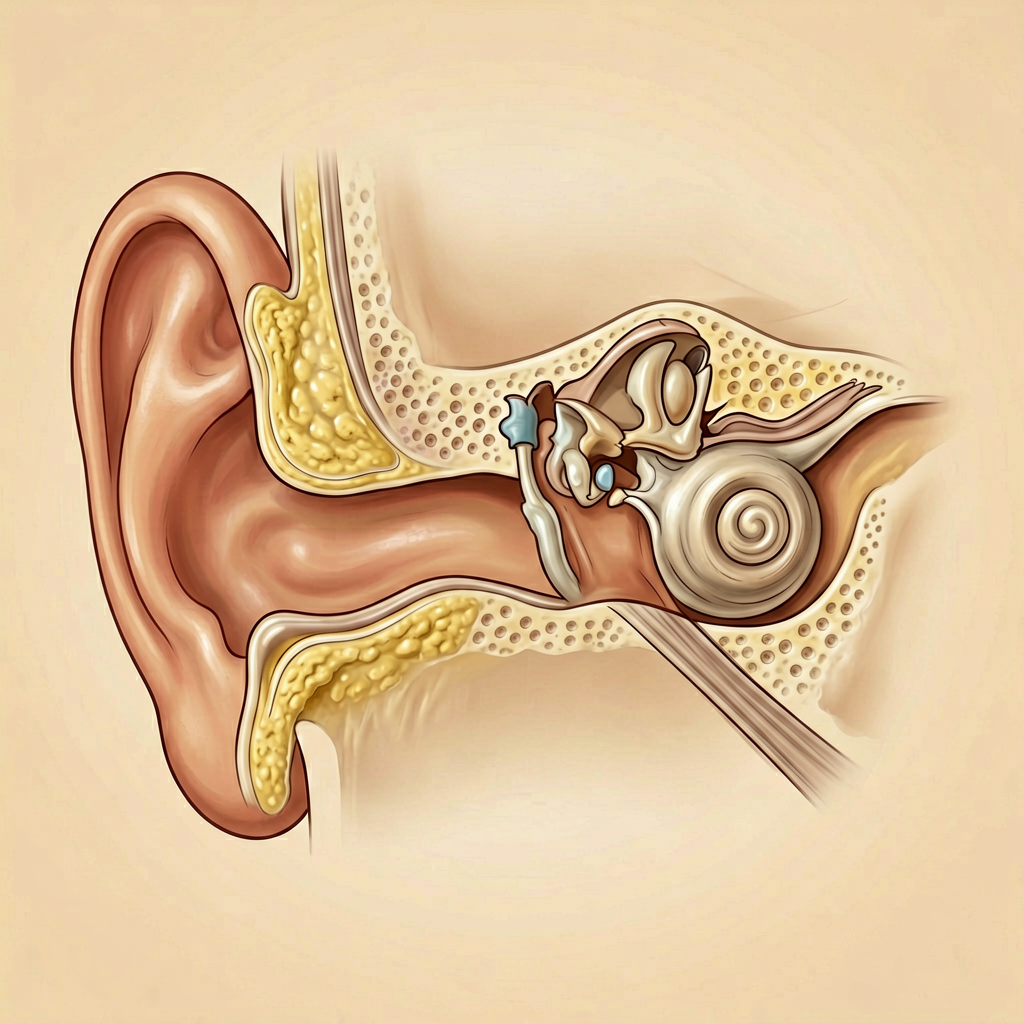
What Is Tinnitus? (And What Does It Sound Like?)
Tinnitus is the perception of sound in the absence of an external source. It's not a disease itself — it's a symptom that can result from various underlying conditions affecting the auditory system, circulatory system, or both.
People describe tinnitus sounds differently:
| Sound | Likely Type | Common Association |
|---|---|---|
| Ringing | Non-pulsatile | Hearing loss, noise exposure |
| Buzzing | Non-pulsatile | Medication-induced, hearing loss |
| Hissing/Static | Non-pulsatile | Age-related hearing loss |
| Clicking | Either | TMJ disorder, muscle spasms |
| Whooshing | Pulsatile | Vascular causes — see a doctor |
| Heartbeat/thumping | Pulsatile | Vascular causes — see a doctor |
Key Statistics
| Statistic | Figure |
|---|---|
| Adults affected globally | 10-15% |
| Found it debilitating | ~20% of those with tinnitus |
| Occurring with hearing loss | ~90% |
| TMJ patients with tinnitus | ~40% |
| CBT distress reduction | 60-80% |
| Bimodal neuromodulation improvement | ~78% (2025 RCT) |
The Two Types of Tinnitus (Critical Distinction)
Non-Pulsatile Tinnitus (95% of Cases)
The "classic" tinnitus — ringing, buzzing, or hissing. It's generated by the auditory system itself, typically as a result of:
- Hearing loss: When the brain receives reduced auditory input, it compensates by increasing neural gain — this "turns up the volume" on internal noise
- Sensorineural origin: Arises from the cochlea, auditory nerve, or central auditory pathways
- Sounds like: Ringing, buzzing, hissing, static — steady, not rhythmically pulsing
Pulsatile Tinnitus (5% of Cases)
Sounds like: Whooshing, thumping, or a heartbeat sound in your ear — in sync with your pulse.
This type has different causes (vascular, not auditory) and different treatments. The sound is caused by turbulent blood flow near the ear.
⚠️ Pulsatile tinnitus requires medical evaluation — it can indicate a vascular condition (venous sinus stenosis, dural AV fistula, glomus tumor, high cardiac output). Do not dismiss it as "just tinnitus."
What Causes Tinnitus? The 12 Most Common Triggers
| # | Cause | Notes |
|---|---|---|
| 1 | Age-related hearing loss (presbycusis) | Most common cause — gradual onset after 60 |
| 2 | Noise-induced hearing loss | #1 preventable cause — affects ~26 million Americans |
| 3 | Earwax blockage | Simple fix — most reversible cause |
| 4 | TMJ disorders | 40% of TMJ patients have tinnitus |
| 5 | Cervical spine issues | Neck tension, forward head posture |
| 6 | Cardiovascular conditions | Hypertension, atherosclerosis (especially pulsatile) |
| 7 | Ototoxic medications | Over 200 drugs — NSAIDs, certain antibiotics, loop diuretics |
| 8 | Head and neck injuries | Concussion, whiplash |
| 9 | Meniere's disease | Tinnitus + vertigo + hearing loss |
| 10 | Acoustic neuroma | Rare (1 in 100,000) — one-sided tinnitus is a key sign |
| 11 | COVID-19 and post-viral | 2021-2026 data shows increased tinnitus reports |
| 12 | Stress and anxiety | The anxiety-tinnitus loop |
The Tinnitus-Anxiety Loop: Why Stress Makes It Worse
One of the most important but under-discussed aspects of tinnitus:
Tinnitus → Anxiety/fear → Increased attention to sound → Louder perception → More anxiety
The brain's limbic system (emotional center) plays a central role in tinnitus perception. When you react to tinnitus with fear or frustration, the brain amplifies the signal. This is why "trying to ignore it" doesn't work — the effort of suppression actually increases attention to the sound.
Breaking the Loop
- Stop fighting it — Habituation (the brain learning to filter out the sound) is the goal, not suppression
- Address the anxiety — CBT, meditation, and stress reduction directly reduce tinnitus perception
- Sleep is critical — Tinnitus is almost always louder when you're tired. Prioritize sleep quality
- Create a bedtime ritual — A calm, predictable pre-sleep routine signals your nervous system it's safe to relax
Tinnitus From a TCM Perspective: The Kidney Opens Into the Ears
In Traditional Chinese Medicine, the ears are the "orifice" of the Kidney system. The classic text states: "When Kidney Qi reaches the ears, hearing is clear. When Kidney Essence is deficient, tinnitus arises."
Common TCM Patterns in Tinnitus
| TCM Pattern | Key Symptoms | Treatment Principle |
|---|---|---|
| Kidney Essence Deficiency (肾精亏虚) | Gradual onset, high-pitched ringing, worse at night, accompanied by dizziness, low back ache, memory decline | Nourish Kidney Essence |
| Liver Fire Rising (肝火上扰) | Sudden onset, loud roaring sound, worse with stress/anger, red face, bitter taste, headache | Drain Liver Fire |
| Phlegm-Fire Stagnation (痰火郁结) | Sensation of ear fullness, muffled hearing, dizziness, thick tongue coating | Clear Phlegm-Heat, unblock the orifices |
| Blood Stasis in the Head (瘀血阻窍) | Persistent, fixed tinnitus; history of head trauma; dark complexion | Move Blood, unblock the channels |
TCM Lifestyle Recommendations
For Kidney Deficiency pattern (most common in chronic tinnitus): - Diet: Black sesame, walnuts, goji berries, bone broth, sea cucumber - Avoid: Excessive salt, overwork, sleep deprivation - Rest: Adequate sleep is the most important factor — the Kidney stores Essence during deep rest
For Liver Fire pattern (stress-aggravated tinnitus): - Diet: Mung beans, chrysanthemum tea, celery, cucumber (cooling foods) - Avoid: Alcohol, spicy foods, excessive anger or frustration - Movement: Gentle qi gong, tai chi — avoid overheated, intense exercise
Acupressure Points for Tinnitus Relief
| Point | Location | Best For |
|---|---|---|
| SI-19 (Ting Gong) | In front of the ear opening | Direct tinnitus management |
| GB-2 (Ting Hui) | Below SI-19, near jaw | Tinnitus with TMJ involvement |
| TE-17 (Yi Feng) | Behind the earlobe | General ear health |
| KI-3 (Tai Xi) | Behind inner ankle | Kidney deficiency — root treatment |
| LV-3 (Tai Chong) | Between 1st and 2nd toe | Liver Fire pattern |
| GB-20 (Feng Chi) | Base of skull | Neck-related tinnitus, stress |
The Role of Aromatherapy in Tinnitus Management
Aromatherapy plays a supportive role in tinnitus management — not by directly affecting the auditory system, but by addressing the factors that amplify tinnitus perception.
How Aromatherapy Helps
1. Breaking the anxiety-tinnitus loop The most powerful thing you can do for tinnitus is reduce your stress response to it. Aromatherapy activates the parasympathetic nervous system, lowering the "threat level" your brain assigns to the tinnitus sound: - Sandalwood: Deeply grounding, traditionally used in meditation to calm the Shen (spirit) - Lavender: Well-studied for anxiety reduction — directly addresses the emotional amplification of tinnitus - Frankincense: Supports slow, deep breathing; activates the vagus nerve
2. Improving sleep quality Tinnitus is almost always more noticeable at night when there's less ambient sound. A calming pre-bed aromatherapy ritual: - Reduces the time spent lying awake focusing on the sound - Improves sleep depth — fatigue amplifies tinnitus perception - Creates a predictable "safe" signal to the brain before sleep
Practical Protocol for Nighttime Tinnitus
- Prepare your environment: Low lighting, comfortable temperature
- Background sound: Soft pink noise or nature sounds (not complete silence)
- Aromatherapy: Light sandalwood or lavender incense 20-30 minutes before bed
- Breathing: 4-7-8 breathing (inhale 4, hold 7, exhale 8) while focusing on the aroma
- Consistency: The same ritual every night trains your brain that this is "sleep time"
Note: Avoid strong or刺激性 aromas if you find them irritating — the goal is calming, not stimulating. Some people with tinnitus are sensitive to strong fragrances.
Tinnitus Relief: What Works in 2026 (Evidence Ranking)
Tier 1: Strongest Evidence
| Treatment | How It Works | Evidence |
|---|---|---|
| Cognitive Behavioral Therapy (CBT) | Changes emotional response to tinnitus, reduces distress | 60-80% improvement in clinical trials |
| Hearing aids | Restores auditory input, reduces central gain | Effective for 90% with concurrent hearing loss |
| Bimodal neuromodulation | Combines sound + mild tongue/finger stimulation to retrain the brain | ~78% improvement (2025 Nature Communications RCT) |
| Sound therapy | Provides competing auditory input for habituation | Strong for nighttime relief |
Tier 2: Good Evidence
- Tinnitus Retraining Therapy (TRT): Combines sound therapy + CBT principles
- Mindfulness-Based Stress Reduction: Reduces distress and perception
- Sleep optimization: Fatigue is a major amplifier of tinnitus
- Dietary changes: Reduce salt (affects inner ear pressure), caffeine, and alcohol
Tier 3: Supportive Evidence
- Ginkgo biloba (mixed trial results — may help some)
- Zinc supplementation (if deficient)
- Acupuncture (particularly for TMJ and neck-related tinnitus)
- TCM herbal formulas (pattern-dependent)
What Doesn't Work (and may be dangerous)
- Unregulated "miracle cure" supplements
- Ear candling (burns risk — zero evidence)
- High-dose unproven medications
Sound Therapy: Choosing the Right Sound
| Type | Frequency Profile | Best For |
|---|---|---|
| White noise | Equal energy across all frequencies | General masking, sleep |
| Pink noise | More energy in low frequencies | More natural sounding, preferred for sleep |
| Brown noise | Even more bass-heavy | Deep, rumbling — calming for many |
| Nature sounds | Rain, ocean, forest | Natural masking, relaxation |
| Notched music | Music with the tinnitus frequency removed | May promote neuroplastic changes |
Red Flags — When to See a Doctor Immediately
- Pulsatile tinnitus (whooshing in sync with heartbeat)
- Sudden onset unilateral tinnitus (one ear only)
- Sudden hearing loss with tinnitus
- Dizziness, vertigo, or imbalance
- Tinnitus after head or neck injury
Frequently Asked Questions
Does tinnitus go away on its own?
For many people, tinnitus becomes less noticeable over time (habituation) even if the underlying signal doesn't disappear. Acute tinnitus from earwax, infection, or noise exposure can resolve completely when the cause is addressed.
Is tinnitus permanent?
Chronic tinnitus (>6 months) is often persistent, but the distress associated with it can be significantly reduced with CBT, sound therapy, and lifestyle adjustments.
Why is my tinnitus louder at night?
Two reasons: (1) reduced ambient sound makes it more noticeable, and (2) fatigue amplifies neural sensitivity. Solution: use soft background sound (pink/brown noise) and prioritize sleep quality.
Is tinnitus a sign of a brain tumor?
Rarely. Acoustic neuroma (a benign tumor on the auditory nerve) can cause unilateral tinnitus, but it's very rare (~1 in 100,000). Most tinnitus is from benign causes.
Can anxiety cause tinnitus?
Anxiety doesn't "cause" tinnitus, but it dramatically amplifies your perception of it. The anxiety-tinnitus feedback loop is one of the most important treatment targets.
Can tinnitus be cured?
There is no universal cure, but the vast majority of people can achieve significant relief through a combination of CBT, sound therapy, addressing underlying causes, and habituation.
Conclusion: Your Tinnitus Action Plan
- Know your type: Is it non-pulsatile (ringing/buzzing — 95%) or pulsatile (whooshing/heartbeat — 5% requires vascular evaluation)?
- Get a hearing test: ~90% of tinnitus occurs with some degree of hearing loss
- Address the anxiety: CBT is the single most effective intervention — it doesn't stop the sound, it stops the suffering
- Use sound therapy: Background sound at night is the most practical immediate relief
- Look at the whole picture: Neck, jaw, medications, stress, sleep — tinnitus connects to multiple systems
Medical disclaimer: This article is for educational purposes only. Consult an otolaryngologist (ENT) or audiologist for personalized evaluation and treatment.
Discover the art of mindful living with CENISY. Our handcrafted incense is designed to support your wellness rituals — creating moments of calm in a noisy world.