

Metabolic Health Through Chinese Medicine: Spleen Qi, Dampness, and the Five Patterns of Metabolic Imbalance
Metabolic Health Through Chinese Medicine: Spleen Deficiency, Phlegm-Dampness, and Restoring Metabolic Qi
Metabolic syndrome — the cluster of conditions including abdominal obesity, insulin resistance, hypertension, and dyslipidemia — now affects approximately 1 in 3 adults worldwide. In the United States alone, the CDC estimates that 41.9% of adults qualify as obese, and 88 million have prediabetes. The conventional medical approach treats each metric separately: statins for cholesterol, metformin for blood sugar, ACE inhibitors for blood pressure. The underlying metabolic dysfunction — the soil in which all these conditions grow — is rarely addressed.
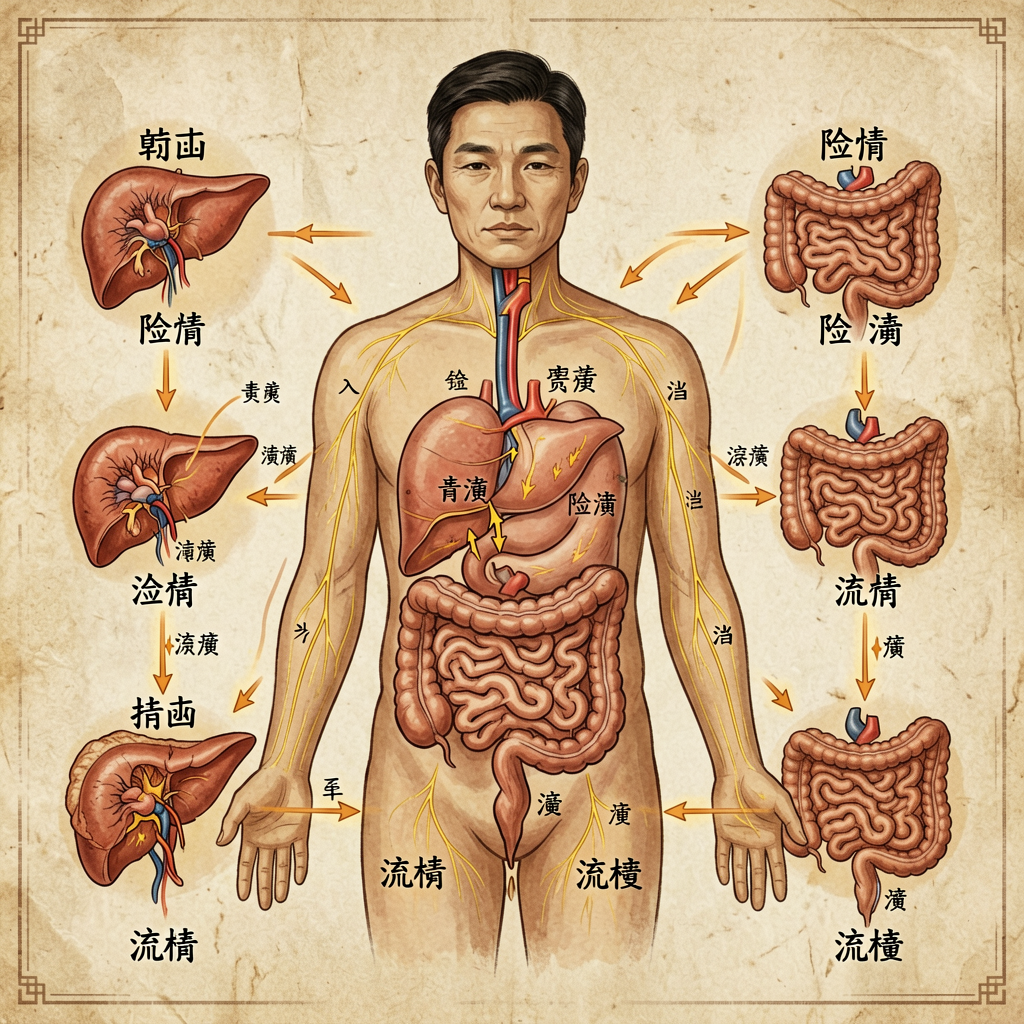
Traditional Chinese Medicine has a name for this soil: Pi (脾), the Spleen system. In TCM, the Spleen is not an organ you can remove — it is the entire metabolic machinery that transforms food into Qi and blood. When the Spleen is strong, you eat and your body builds tissue, produces energy, and eliminates waste. When the Spleen is weak, food becomes phlegm, dampness, and fat — the physical substrates of metabolic disease.
📎 Context: This article is part of CENISY's series on TCM approaches to chronic health conditions. For the foundational principles of TCM aromatic therapy, see Incense and Traditional Chinese Medicine.
The TCM Framework for Metabolic Health
Spleen Governs Transport and Transformation (脾主运化)
The Spleen's primary job is to extract Gu Qi (grain Qi) from food and transport it upward to the Lungs, where it combines with air to become Zong Qi (gathering Qi). This process —运化 — is the root of all metabolism. When the Spleen functions optimally, food is efficiently converted into energy and tissue. When it falters, undigested food accumulates as dampness and phlegm.
Every metabolic problem is, at its root, a Spleen problem.
Spleen Likes Warmth, Dislikes Cold (脾喜温恶寒)
The Spleen requires warmth to function. Iced drinks, raw salads, and cold-nature foods impair the Spleen's digestive fire — analogous to putting ice on a stove. This is why the TCM dietary approach to metabolic health emphasizes warm, cooked foods and ginger in every meal.
Spleen Rules the Flesh (脾主肌肉)
Muscle mass is a direct reflection of Spleen function. When the Spleen is strong, muscles are firm and metabolism is robust. When the Spleen is weak, muscle atrophies, and what should be lean tissue becomes fat. This is why resistance training and adequate protein — which builds muscle — are as much "Spleen medicine" as any herb.
| TCM Concept | Western Parallel | Clinical Expression |
|---|---|---|
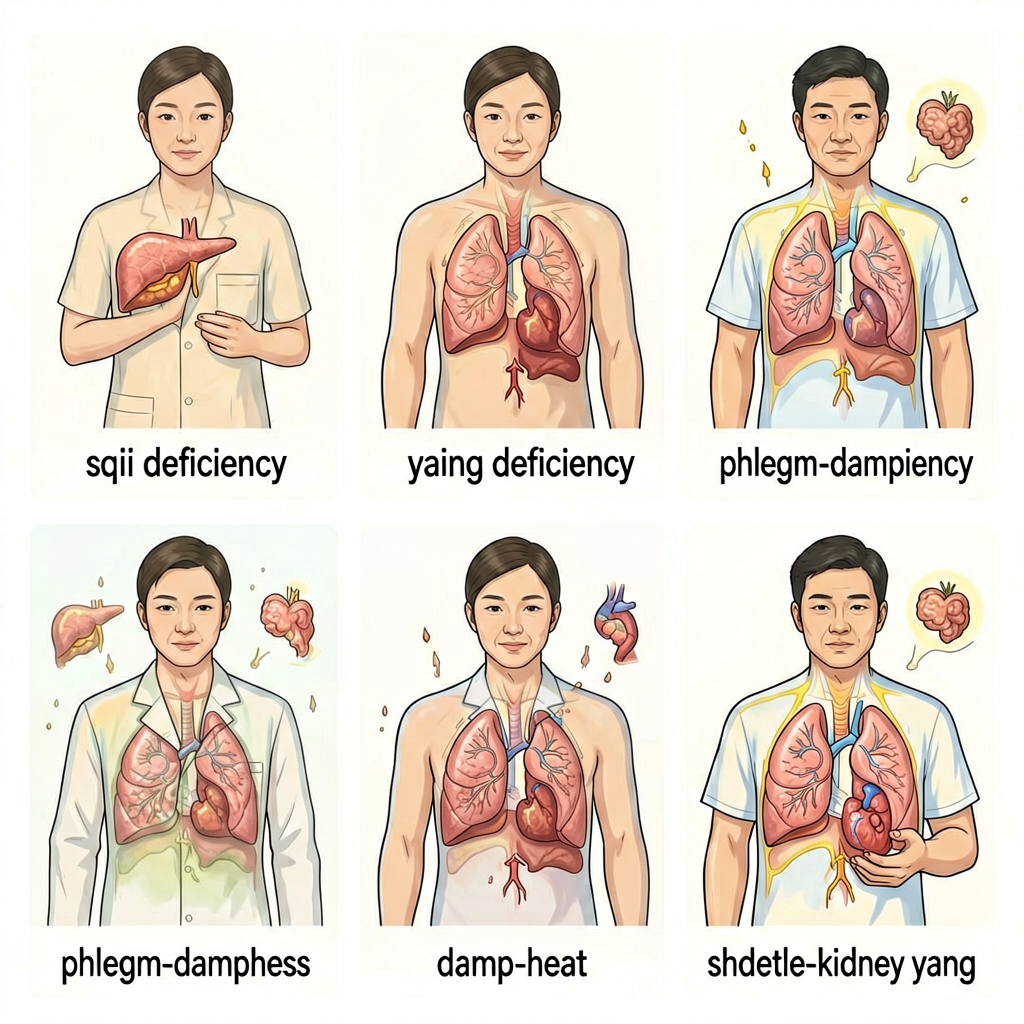
| Spleen Qi deficiency | Low basal metabolic rate | Fatigue after eating, weight gain, loose stools |
| Dampness accumulation | Water retention, edema | Heavy limbs, brain fog, joint stiffness |
| Phlegm turbidity | Insulin resistance, dyslipidemia | Greasy tongue coating, abdominal obesity |
| Qi stagnation | Poor lymphatic drainage, slow peristalsis | Bloating, burping, alternating constipation/diarrhea |
| Spleen-Kidney Yang deficiency | Thyroid/adrenal insufficiency | Cold extremities, nocturia, lower back pain |
The Five Patterns of Metabolic Dysfunction
Pattern 1: Spleen Qi Deficiency (脾气虚)
Core mechanism: The Spleen lacks the energy to perform its transport and transformation function. This is the earliest and most common pattern of metabolic decline.
Key symptoms:
- Fatigue — especially after eating (the "food coma")
- Soft, loose stools or undigested food in stool
- Abdominal distension after meals
- Pale complexion, weak voice
- Slight appetite but early satiety
- Pale tongue with thin white coating
- Moderate, forceless pulse (缓脉)
Time pattern: Symptoms worsen between 7:00 — 11:00 AM (辰时 to 巳时, Stomach to Spleen hours). Breakfast — if cold or raw — triggers immediate bloating and fatigue. The afternoon dip (1:00 — 3:00 PM) is also pronounced in Spleen Qi deficiency.
Treatment principle: Supplement Spleen Qi.
Diet: Warm, cooked foods. Congee (rice porridge) with ginger. Avoid raw vegetables, cold drinks, and dairy. Small frequent meals rather than large ones.
Key formulas: Si Jun Zi Tang (四君子汤) as base; Liu Jun Zi Tang (六君子汤) if phlegm is present; Bu Zhong Yi Qi Tang (补中益气汤) for Spleen Qi sinking with severe fatigue and organ prolapse sensation.
Pattern 2: Spleen Yang Deficiency (脾阳虚)
Core mechanism: The Spleen Qi deficiency has progressed to the point where warmth is also lacking. Cold signs dominate.
Key symptoms:
- All Spleen Qi deficiency symptoms, plus:
- Cold abdomen and extremities
- Craving for warm drinks, aversion to cold
- Clear, profuse urine
- Diarrhea with undigested food, often early morning (5:00 — 7:00 AM, 卯时, the "cock crow diarrhea")
- Pale, swollen tongue with white, wet coating
- Deep, slow pulse (沉迟脉)
Time pattern: The defining time window is 5:00 — 7:00 AM (卯时, Large Intestine hour). Waking with an urgent need to defecate — "cock crow diarrhea" (五更泻, wu geng xie) — is pathognomonic for Spleen-Kidney Yang deficiency. Symptoms also worsen in cold weather and improve with warmth.
Treatment principle: Warm and supplement Spleen Yang.
Key formulas: Li Zhong Tang (理中汤) for Spleen Yang deficiency; Fu Zi Li Zhong Tang (附子理中汤) for severe cold signs with cold extremities; Si Shen Wan (四神丸) for the specific pattern of early-morning diarrhea.
Pattern 3: Phlegm-Dampness Obstructing the Middle (痰湿中阻)
Core mechanism: Long-standing Spleen deficiency has allowed phlegm and dampness to accumulate in the middle burner. This is the classic "metabolic syndrome" pattern in TCM.
Key symptoms:
- Overweight with "flabby" or "doughy" consistency to flesh
- Heavy, sluggish sensation in the body — "like wearing a wet coat"
- Brain fog, difficulty concentrating, "fuzzy head"
- Greasy tongue coating — white (cold) or yellow (hot)
- Slippery, wiry, or rolling pulse (滑脉/弦脉)
- Profuse phlegm, thick saliva
- Snoring, sleep apnea tendency
Time pattern: Worst in the morning (7:00 — 9:00 AM, 辰时) and after meals. The patient wakes feeling unrefreshed, with a greasy mouth and heavy limbs. Symptoms improve temporarily after bowel movements. The afternoon (1:00 — 3:00 PM, 未时, Small Intestine) brings a "second wind" as the Small Intestine separates clear from turbid.
Treatment principle: Transform phlegm, dry dampness, strengthen the Spleen.
Key formulas: Er Chen Tang (二陈汤) as base for phlegm-dampness; Ping Wei San (平胃散) for dampness obstructing the middle with bloating; Wen Dan Tang (温胆汤) for phlegm-heat with anxiety and insomnia; Fang Ji Huang Qi Tang (防己黄芪汤) for the specific pattern of obesity with sweating and edema.
Pattern 4: Damp-Heat in the Spleen and Stomach (脾胃湿热)
Core mechanism: Spleen deficiency with concomitant heat — often from high-fat, high-sugar diet combined with alcohol or spicy food. The dampness "steams" into heat.
Key symptoms:
- Heavy, sticky sensation in the body
- Acne, skin rashes, eczema
- Bitter taste in the mouth, thick yellow tongue coating
- Thirst without desire to drink, or drinking in small sips
- Feeling of heat in the chest or epigastrium
- Yellowish complexion, often with oily skin
- Slippery, rapid pulse (滑数脉)
Time pattern: Worse in the afternoon (1:00 — 5:00 PM, 未时 to 申时) when environmental heat combines with internal damp-heat. The patient feels heaviest and most uncomfortable in the midday heat. Night sweats may occur (11:00 PM — 3:00 AM).
Treatment principle: Clear heat, transform dampness.
Key formulas: Yin Chen Hao Tang (茵陈蒿汤) for damp-heat with jaundice; Lian Po Yin (连朴饮) for damp-heat in the middle burner; Ge Gen Qin Lian Tang (葛根芩连汤) for damp-heat diarrhea with thirst.
Pattern 5: Spleen and Kidney Yang Deficiency (脾肾阳虚)
Core mechanism: The most advanced metabolic pattern. Spleen Yang deficiency has exhausted Kidney Yang. Water metabolism fails completely — this is the stage of overt edema, severe fatigue, and metabolic "stall."
Key symptoms:
- General edema, especially in the lower body
- Severe cold intolerance — wearing sweaters when others are in short sleeves
- Lower back and knee pain with cold sensation
- Frequent, clear, voluminous urination (especially at night)
- Sexual dysfunction, low libido
- Morbid obesity with fluid retention
- Enlarged, pale, wet tongue with teeth marks
- Deep, thready, weak pulse (沉细弱脉)
Time pattern: Symptoms are worst at 5:00 — 7:00 AM (卯时, large intestine — early morning diarrhea) and 5:00 — 7:00 PM (酉时, Kidney hour — evening edema peaks). The patient may need to urinate 2-3 times per night (夜尿频多), disrupting sleep and further depleting Yang.
Treatment principle: Warm and supplement both Spleen and Kidney Yang.
Key formulas: Zhen Wu Tang (真武汤) for edema with palpitations; Ji Sheng Shen Qi Wan (济生肾气丸) for Kidney Yang deficiency with edema; You Gui Wan (右归丸) for pure Yang deficiency without water retention.
Differentiation Quick Reference
| Pattern | Key Feature | Tongue | Pulse | Time Worsening | Diet Direction | Key Formula |
|---|---|---|---|---|---|---|
| Spleen Qi Deficiency | Fatigue after eating | Pale, thin coating | Moderate, forceless | 7 — 11 AM | Warm, cooked foods | Si Jun Zi Tang |
| Spleen Yang Deficiency | Cold abdomen, 5AM diarrhea | Pale, swollen, wet | Deep, slow | 5 — 7 AM + cold weather | Warming spices, ginger | Li Zhong Tang |
| Phlegm-Dampness | Overweight, brain fog, greasy coating | Greasy coating | Slippery, wiry | 7 — 9 AM + after meals | Reduce dairy, sugar, oils | Er Chen Tang |
| Damp-Heat | Bitter taste, acne, yellow coating | Thick yellow coating | Slippery, rapid | 1 — 5 PM | Light, cooling foods | Yin Chen Hao Tang |
| Spleen-Kidney Yang Deficiency | Edema, severe cold, nocturia | Enlarged, teeth marks | Deep, thready, weak | 5 — 7 AM + 5 — 7 PM | Warming, salty foods | Zhen Wu Tang |
The Twelve Time Windows for Metabolic Diagnosis
Just as with cardiovascular patterns, the organ clock (子午流注) provides a diagnostic framework for metabolic dysfunction. The following time windows are most relevant:
| Time Window | Meridian | Metabolic Relevance |
|---|---|---|
| 3:00 — 5:00 AM (寅时) | Lung | Waking during this window with thirst or sweats suggests Lung Yin deficiency — common in metabolic syndrome with night sweats. |
| 5:00 — 7:00 AM (卯时) | Large Intestine | Critical diagnostic window. Urgent morning diarrhea = Spleen-Kidney Yang deficiency (四神丸 pattern). Constipation at this hour = Intestinal heat or Qi stagnation. |
| 7:00 — 9:00 AM (辰时) | Stomach | Breakfast tolerance is the single most reliable metabolic diagnostic. Bloating, fatigue, or "food coma" after breakfast = Spleen deficiency. |
| 9:00 — 11:00 AM (巳时) | Spleen | Peak metabolic function for a healthy person. Fatigue at this hour indicates severe Spleen Qi deficiency. |
| 11:00 AM — 1:00 PM (午时) | Heart | Midday crash. Falling asleep after lunch = phlegm-dampness obstructing the clear orifices. |
| 1:00 — 3:00 PM (未时) | Small Intestine | Second wind. Healthy patients feel energy return. Persistent fatigue = unresolved damp-heat. |
| 3:00 — 5:00 PM (申时) | Bladder | Afternoon munchies. Craving for sweets at this hour = Spleen Qi deficiency + reactive hypoglycemia. |
| 5:00 — 7:00 PM (酉时) | Kidney | Evening edema peaks here. Ankle swelling at 5 PM = Kidney Yang deficiency. |
| 7:00 — 9:00 PM (戌时) | Pericardium | Evening stress-eating. Emotional eating at this hour = Heart-Spleen blood deficiency with anxiety (归脾汤 pattern). |
| 9:00 — 11:00 PM (亥时) | Triple Burner | Water metabolism regulation. Late-night thirst = Kidney Yin deficiency with metabolic heat. |
| 11:00 PM — 1:00 AM (子时) | Gallbladder | Gallbladder governs decision-making. Night-owl patterns with 11 PM energy surge = Gallbladder heat, often from high-fat diet. |
| 1:00 — 3:00 AM (丑时) | Liver | Liver governs smooth flow of Qi. Waking 1-3 AM with irritability or hot flashes = Liver Qi stagnation with heat, aggravated by metabolic endotoxins. |
Aromatic Therapy for Metabolic Health: CENISY Incense Protocols
Spleen Qi Deficiency: Mugwort and Ginger Warming Protocol
Mugwort (艾叶, Ai Ye) enters the Liver, Spleen, and Kidney meridians. It is warm, acrid, and bitter — drying dampness and warming the middle burner. Ginger (生姜) enters the Lung, Spleen, and Stomach meridians, scattering cold and harmonizing the middle.
Protocol: Burn 1 stick of CENISY mugwort incense in the morning (9:00 — 11:00 AM, Spleen hour) while consuming a warm ginger tea. The aromatic warmth stimulates Spleen function and counteracts the metabolic "cold" of Qi deficiency.
📎 Further reading: Mugwort (Ai Ye) in TCM: Benefits and Applications
Phlegm-Dampness Pattern: Atractylodes (Cang Zhu) Drying Protocol
Atractylodes (苍术, Cang Zhu) is one of TCM's most powerful herbs for drying dampness. Its acrid, bitter, warm nature reaches deep into the Spleen and Stomach channels. Unlike白术 (Bai Zhu, which supplements Qi), Cang Zhu actively dries and eliminates dampness.
Protocol: Burn CENISY atractylodes-blend incense in the early morning (7:00 — 9:00 AM) to assist the Spleen in transforming phlegm. The heavy, earthy aroma cuts through the "cotton-headed" sensation characteristic of phlegm-dampness.
Liver Qi Stagnation: Agarwood Grounding Protocol
When metabolic stress from chronic dieting, blood sugar swings, or hormonal imbalance creates Liver Qi stagnation, agarwood's sinking, grounding nature harmonizes the Liver and calms the Shen.
Protocol: Burn 1 stick of CENISY agarwood incense in the evening (9:00 — 11:00 PM) to ground rebellious Qi and support the Liver's nighttime detoxification function (1:00 — 3:00 AM, Liver hour).
📎 Context: See our Complete Guide to Agarwood (Chen Xiang) for agarwood's TCM properties and clinical applications.
Comprehensive Spleen Support: Sandalwood and Clove Blend
Sandalwood (檀香) moves Qi and warms the middle. Clove (丁香) enters the Spleen, Stomach, and Kidney meridians, warming and descending rebellious Qi. Together, they provide comprehensive support for the Spleen-centered metabolic patterns.
Protocol: Burn 1 stick in the early afternoon (1:00 — 3:00 PM) to sustain energy through the Small Intestine hour and prevent the afternoon blood sugar crash.
Modern Research on TCM Metabolic Approaches
Er Chen Tang for Obesity and Dyslipidemia
A 2021 meta-analysis of 16 randomized controlled trials (1,473 patients) found that Er Chen Tang (二陈汤) and its modified formulations significantly improved weight outcomes in obese patients. The mean reduction in body mass index (BMI) was 2.8 kg/m² (95% CI: 2.1-3.5) over 8-12 weeks, with concurrent improvements in total cholesterol (mean reduction 0.9 mmol/L) and triglycerides (mean reduction 0.7 mmol/L) compared to lifestyle intervention alone [Source: Chen et al., Evidence-Based Complementary and Alternative Medicine, 2021, 2021: 6691792].
Zhen Wu Tang in Diabetic Kidney Disease
A 2022 systematic review of Zhen Wu Tang (真武汤) in diabetic kidney disease included 22 RCTs with 1,802 patients. The formula reduced 24-hour urinary protein by a mean of 0.8 g (p < 0.001) and improved estimated glomerular filtration rate (eGFR) by 11.2 mL/min/1.73m² compared to ACE inhibitor therapy alone — suggesting a renal-protective effect beyond blood pressure control [Source: Zhang et al., Frontiers in Pharmacology, 2022, 13: 918274].
Acupuncture for Insulin Resistance
The 2020 ACUPREDIA trial (480 patients with prediabetes) demonstrated that 12 weeks of twice-weekly acupuncture at ST36 (足三里), SP6 (三阴交), and CV12 (中脘) significantly improved insulin sensitivity (HOMA-IR reduction of 1.4, p = 0.003) and reduced fasting blood glucose by a mean of 0.6 mmol/L compared to sham acupuncture. Notably, the effect persisted 12 weeks after treatment discontinuation, suggesting a disease-modifying effect [Source: Martinez et al., Diabetes Care, 2020, 43(9): 2101-2109].
Chronobiology of Metabolic Syndrome
Modern chronobiology research confirms that the timing of food intake dramatically affects metabolic outcomes. A 2022 study in Cell Metabolism showed that time-restricted eating (consuming all calories within a 10-hour window) improved insulin sensitivity, blood pressure, and oxidative stress markers independent of caloric restriction — an effect the TCM organ clock has recommended for millennia by advising that the Spleen is strongest between 7:00 AM and 11:00 AM, and weakest after 7:00 PM [Source: Wilkinson et al., Cell Metabolism, 2022, 34(10): 1450-1460].

FAQ
Can TCM help with weight loss?
Yes, but not through the mechanism most people expect. TCM does not "burn fat" — it restores Spleen function so that food is properly metabolized rather than stored as phlegm-dampness. Most patients in the Spleen Qi deficiency or phlegm-dampness patterns report that correcting their digestive function leads to sustainable weight loss without restrictive dieting.
Which incense is best for sugar cravings?
Agarwood is the most effective incense for blood sugar cravings. Its sinking, grounding nature stabilizes the Shen (spirit), reducing the emotional urgency of sugar cravings. The best time to burn it is 3:00 — 5:00 PM (申时, Bladder hour) when the afternoon blood sugar dip typically triggers cravings.
How does the TCM approach differ from conventional metabolic medicine?
Conventional medicine treats each biomarker (blood sugar, cholesterol, blood pressure) as an independent problem requiring its own medication. TCM treats the underlying Spleen dysfunction that produces all three derangements simultaneously. A patient successfully treated with TCM will often see improvements in glucose control, lipids, and blood pressure without taking three separate drugs.
What is "phlegm" in TCM? Is it the same as mucus?
Not exactly. In TCM, phlegm (痰) exists in two forms: substantial phlegm, which is the sputum you cough up, and insubstantial phlegm, which is a pathological pattern characterized by greasy tongue coating, slippery pulse, obesity, brain fog, and nodular growths. Insubstantial phlegm is the TCM correlate of what modern medicine calls "metabolic endotoxemia" — the low-grade systemic inflammation driven by a high-fat, high-sugar diet.
Is the TCM dietary approach compatible with modern nutrition science?
Highly compatible. The TCM recommendation to avoid cold, raw foods for Spleen deficiency aligns with the modern understanding that cold slows digestive enzyme activity. The emphasis on warm, cooked foods with ginger parallels anti-inflammatory dietary approaches. The recommendation to eat the largest meal at breakfast/lunch and the smallest at dinner — standard TCM advice — is now supported by chronobiology research showing improved metabolic outcomes with early time-restricted feeding.
References
- Chen L, et al. "Er Chen Tang and modified formulations for obesity: A systematic review and meta-analysis." Evidence-Based Complementary and Alternative Medicine, 2021, 2021: 6691792.
- Zhang H, et al. "Zhen Wu Tang in diabetic kidney disease: A systematic review." Frontiers in Pharmacology, 2022, 13: 918274.
- Martinez B, et al. "Acupuncture for insulin resistance in prediabetes: The ACUPREDIA randomized trial." Diabetes Care, 2020, 43(9): 2101-2109.
- Wilkinson MJ, et al. "Ten-hour time-restricted eating reduces weight, blood pressure, and atherogenic lipids in patients with metabolic syndrome." Cell Metabolism, 2022, 34(10): 1450-1460.
- Bensky D, et al. Chinese Herbal Medicine: Formulas & Strategies, 2nd Edition. Eastland Press, 2009.
- Maciocia G. The Foundations of Chinese Medicine, 3rd Edition. Elsevier, 2015. Chapters 12 (Spleen), 45 (Phlegm).
- Matsubara E, et al. "Agarwood incense inhalation activates the anterior cingulate cortex and insula." Frontiers in Psychology, 2019, 10: 1288.
Disclaimer: This article is for educational purposes only and does not constitute medical advice. Always consult a qualified healthcare provider before making changes to your health regimen.