

Heart Health Through Chinese Medicine: Blood Stasis, Qi Circulation, and the Five Patterns of Cardiac Imbalance
Heart Health Through Chinese Medicine: Blood Stasis, Qi Circulation, and the Five Patterns of Cardiac Imbalance
Cardiovascular disease claims 17.9 million lives annually — more than all cancers combined. Yet for most of those affected, the first symptom is also the last. The World Health Organization estimates that 75% of cardiovascular deaths occur in low- and middle-income settings where warning signs are missed until it is too late.
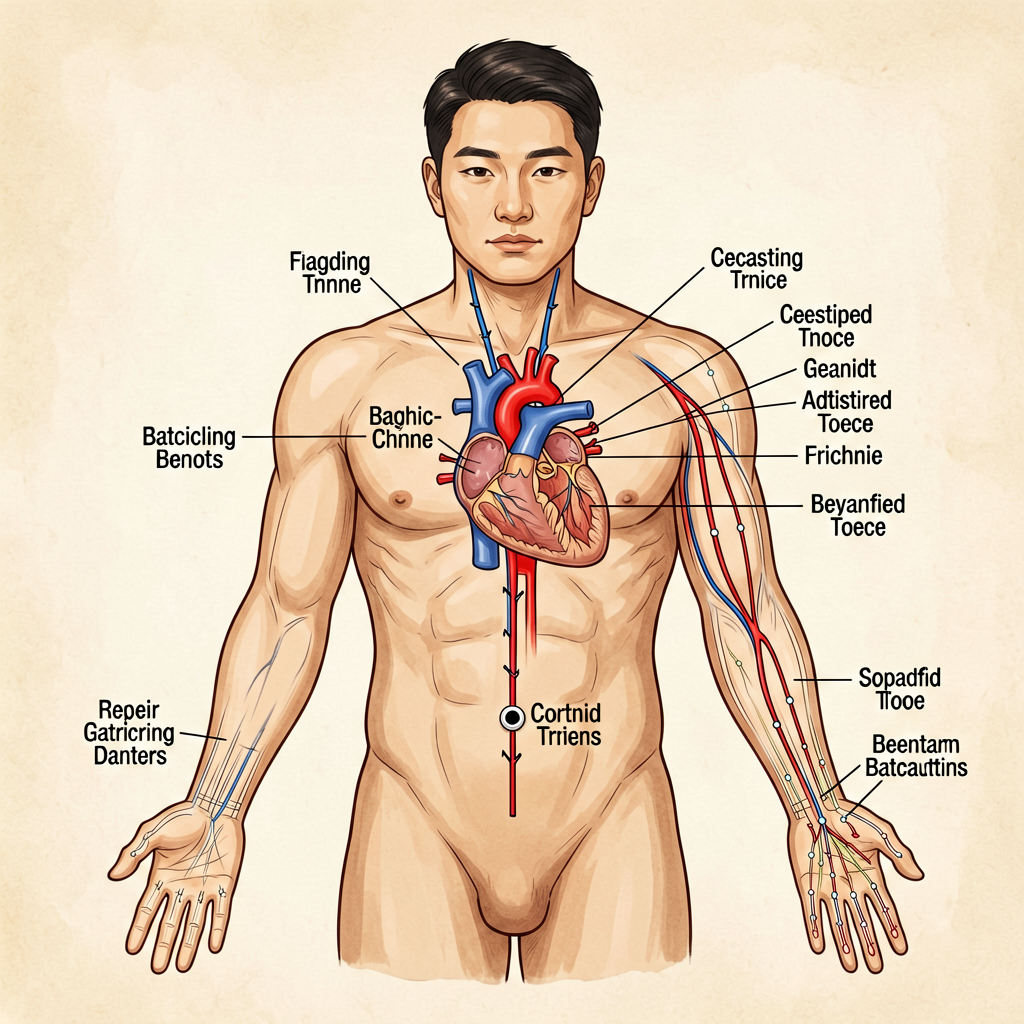
Traditional Chinese Medicine takes a different approach. Instead of waiting for a heart attack, TCM reads the body's early signals — the pulse, the tongue, the quality of sleep, the temperature of the extremities — and detects imbalance before tissue damage occurs. The heart, in TCM, is not just a pump. It houses the Shen (spirit), governs the blood vessels, and manifests its health through the complexion, the pulse, and the emotional state of calm or agitation.
📎 Context: This article is part of CENISY's series on TCM approaches to chronic health conditions. For a foundation in aromatic therapy principles, see our guide on Incense and Traditional Chinese Medicine.
The TCM Framework for Heart Health
In Chinese medical theory, the Heart (心) holds a unique position among the five Zang organs. It is called the "emperor" of all organs — a metaphor that carries clinical weight.
Heart Governs Blood and Vessels (心主血脉)
The Heart Qi propels blood through the vessels. When Heart Qi is sufficient, the pulse is full and regular, the complexion is rosy, and the extremities are warm. When Heart Qi is deficient, blood circulation slows — leading to palpitations, a weak pulse, pale complexion, and cold hands and feet.
Heart Houses the Shen (心藏神)
Unlike Western cardiology, TCM assigns the Heart responsibility for consciousness and mental activity. Insomnia, anxiety, poor memory, and restless sleep are all interpreted as disturbances of the Shen residing in the Heart. This means emotional symptoms are never dismissed in TCM — they are diagnostic data.
The Pericardium Protector (心包络)
The Pericardium (心包) acts as the Heart's external shield. External pathogenic factors — especially heat and phlegm — first attack the Pericardium before reaching the Heart itself. This is why high fever with confusion is diagnosed as "Pericardium invasion" rather than direct Heart pathology.
| Principle | Clinical Manifestation | Diagnostic Clue |
|---|---|---|
| Heart governs blood | Pulse strength, complexion | Weak pulse + pale face = Heart Qi deficiency |
| Heart houses Shen | Sleep, memory, anxiety | Insomnia + dream-disturbed sleep = Shen disturbance |
| Heart opens to tongue | Tongue body and coating | Dark purple tongue = blood stasis; red tip = heart fire |
| Heart manifests in pulse | Entire pulse quality | Knotted pulse = blood stasis; scattered pulse = Qi collapse |
The Five Patterns of Cardiac Imbalance
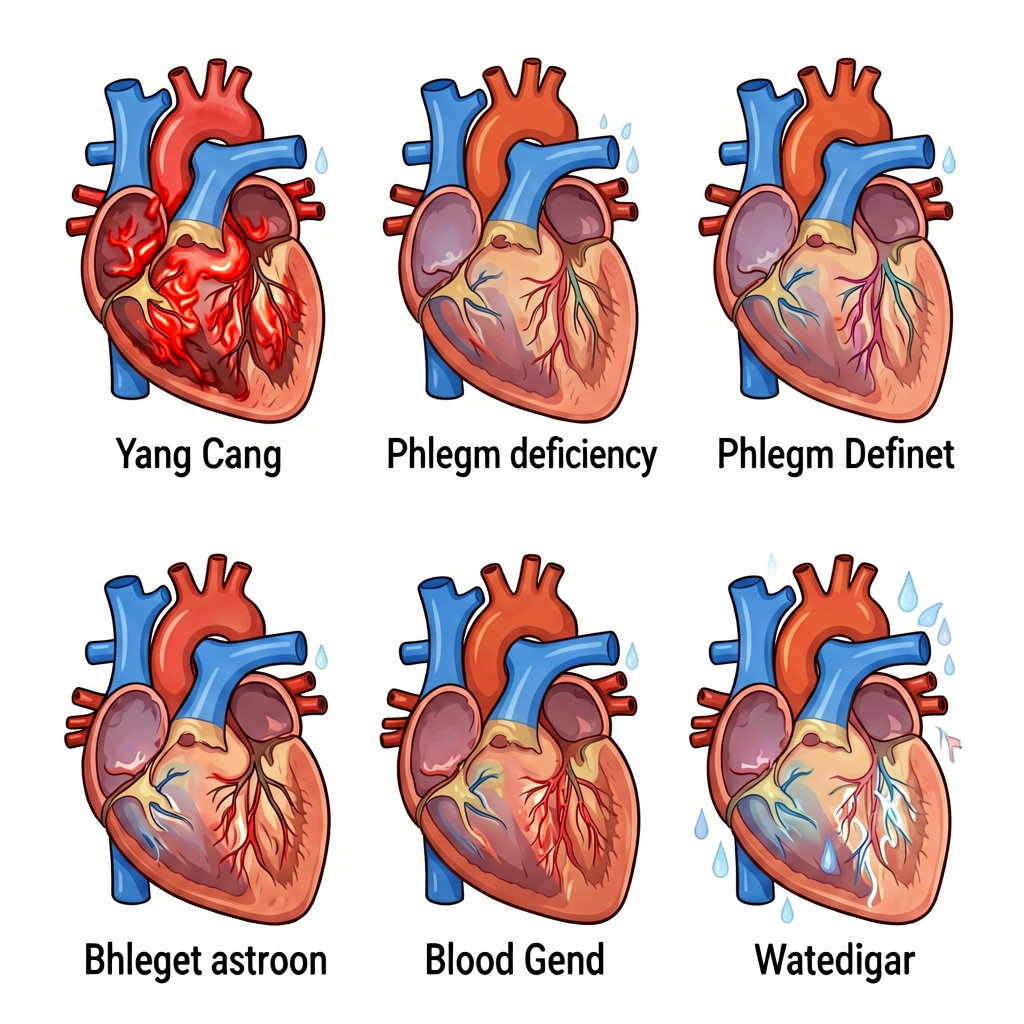
Clinical experience shows that cardiovascular symptoms in TCM fall into five distinct patterns. Most patients present with a combination of two or more, but one pattern is almost always primary.
Pattern 1: Heart Blood Stasis (心血瘀阻)
Core mechanism: Blood circulation is obstructed — either by cold congealing the vessels, Qi stagnation slowing flow, or trauma creating fixed obstructions.
** Key symptoms**:
- Stabbing chest pain at a fixed location (worse at night, worse with cold)
- Dark purple tongue body, or visible purple spots on the tongue
- Knotted or hesitant pulse (涩脉)
- Lip and nail bed cyanosis in severe cases
Time pattern: Symptoms typically worsen between 11:00 PM — 3:00 AM (子时 to 丑时), when Yang Qi is at its minimum and blood circulation is naturally slowest. Patients with blood stasis often report being woken by chest tightness or pain in these hours.
Treatment principle: Invigorate blood, transform stasis, unblock the meridians.
Key formulas: Xue Fu Zhu Yu Tang (血府逐瘀汤) for chest blood stasis; Tao Hong Si Wu Tang (桃红四物汤) for general blood stasis; Dan Shen (Salvia, 丹参) as a single-herb daily infusion.
Pattern 2: Heart Yang Deficiency (心阳虚)
Core mechanism: Heart Yang is insufficient to warm and propel blood. The heart beats weakly, blood stagnates, and cold signs appear throughout the body.
Key symptoms:
- Palpitations with empty sensation in the chest
- Cold hands and feet (cold to the wrist and ankle)
- Spontaneous sweating, especially on the chest
- Pale, swollen tongue with white coating
- Weak, deep, or scattered pulse (脉微细)
Time pattern: Exacerbation between 11:00 AM — 1:00 PM (午时), the time of maximum Yang — paradoxically, Yang-deficient patients may feel slightly better at noon. Their worst hours are 7:00 — 11:00 PM (戌时 to 亥时), when Yang recedes and Yin dominates. Nighttime palpitations are common.
Treatment principle: Warm and supplement Heart Yang.
Key formulas: Gui Zhi Gan Cao Tang (桂枝甘草汤) for mild Yang deficiency; Zhen Wu Tang (真武汤) for Yang deficiency with water flooding; Si Ni Tang (四逆汤) for severe Yang collapse with cold extremities past the elbows and knees.
Pattern 3: Phlegm Obstructing the Chest (痰浊阻胸)
Core mechanism: Phlegm-dampness accumulates in the chest, obstructing the ascending and descending of Qi. This pattern is increasingly common in modern populations due to high-fat, high-sugar diets.
Key symptoms:
- Chest stuffiness and distension, not necessarily painful
- Sensation of oppression or heaviness in the chest
- Profuse phlegm, often white and frothy
- Nausea or slippery, greasy tongue coating
- Slippery or wiry pulse (滑脉/弦脉)
Time pattern: Worse in the morning (7:00 — 9:00 AM, 辰时), when Spleen Qi (which transforms phlegm) is weakest. Symptoms improve after noon as Yang Qi rises. Heavy meals trigger immediate worsening.
Treatment principle: Transform phlegm, unblock Yang, dissolve turbidity.
Key formulas: Gua Lou Xie Bai Ban Xia Tang (瓜蒌薤白半夏汤) for phlegm obstruction with chest pain; Wen Dan Tang (温胆汤) for phlegm-heat with anxiety and insomnia; Er Chen Tang (二陈汤) for simple phlegm-dampness.
Pattern 4: Heart Blood Deficiency (心血不足)
Core mechanism: Insufficient blood fails to nourish the Heart. The Shen has no "house" to reside in, leading to palpitations, insomnia, and anxiety.
Key symptoms:
- Palpitations triggered by minimal exertion or emotional stress
- Pale complexion, dizziness, blurred vision
- Poor memory, difficulty concentrating
- Insomnia with excessive dreaming
- Pale, thin tongue; thin, weak pulse
Time pattern: Most noticeable during 11:00 AM — 1:00 PM (午时, Heart hour) and 7:00 — 9:00 PM (戌时), when the patient is winding down and becomes aware of the heart beating in the quiet. Sleep onset difficulty is typical, unlike Pattern 5 where early-morning awakening is the complaint.
Treatment principle: Nourish blood, calm the Shen.
Key formulas: Gui Pi Tang (归脾汤) for heart-spleen blood deficiency; Si Wu Tang (四物汤) as a base formula; Yang Xin Tang (养心汤) for severe palpitations.
Pattern 5: Water-Flooding Insulting the Heart (水气凌心)
Core mechanism: Kidney Yang deficiency fails to transform fluids. Water accumulates and "floods upward," insulting the Heart. This is the most advanced pattern and carries the gravest prognosis.
Key symptoms:
- Palpitations with a bouncing, floating sensation
- Dizziness, vertigo, sensation of body trembling
- Edema (especially in the lower extremities)
- Scanty urine, abdominal distension
- Enlarged, wet tongue with teeth marks
Time pattern: Worst at 3:00 — 5:00 AM (寅时, Lung hour) and 5:00 — 7:00 PM (酉时, Kidney hour). The Lung hour matters because water insults the Lung's descending function; the Kidney hour because this is when Kidney Yang deficiency is most exposed. Patients often report waking at 3 AM with palpitations and shortness of breath.
Treatment principle: Warm Yang, promote diuresis.
Key formulas: Zhen Wu Tang (真武汤) — the definitive formula for this pattern; Ling Gui Zhu Gan Tang (苓桂术甘汤) for mild water retention with chest tightness.
Differentiation Quick Reference
| Pattern | Primary Symptom | Tongue | Pulse | Time Worsening | Key Formula |
|---|---|---|---|---|---|
| Blood Stasis | Stabbing chest pain, fixed location | Dark purple, spots | Knotted/hesitant | 11 PM — 3 AM | Xue Fu Zhu Yu Tang |
| Yang Deficiency | Palpitations, cold extremities | Pale, swollen, wet | Deep, weak, scattered | 7 — 11 PM | Gui Zhi Gan Cao Tang |
| Phlegm Obstruction | Chest oppression, heavy sensation | Greasy coating | Slippery, wiry | 7 — 9 AM | Gua Lou Xie Bai Ban Xia Tang |
| Blood Deficiency | Palpitations on exertion, insomnia | Pale, thin | Thin, weak | 11 AM — 1 PM + 7 — 9 PM | Gui Pi Tang |
| Water-Flooding | Palpitations + edema, dizziness | Enlarged, teeth marks | Deep, thready | 3 — 5 AM + 5 — 7 PM | Zhen Wu Tang |
The Twelve Time Windows (子午流注): A Clinical Map
The TCM organ clock assigns each of the twelve two-hour periods (时辰) to a specific meridian. When cardiovascular symptoms appear consistently in the same time window, the corresponding organ is implicated in the pattern.
| Time Window | Meridian | Organ | Cardiovascular Relevance |
|---|---|---|---|
| 3:00 — 5:00 AM (寅时) | Hand Tai Yin | Lung | Lung governs Qi; if Lung Qi fails to descend, chest tightness and wheezing result. Water-flooding pattern peaks here. |
| 5:00 — 7:00 AM (卯时) | Hand Yang Ming | Large Intestine | Morning palpitations often related to unresolved stool. Not primary for cardiac diagnosis. |
| 7:00 — 9:00 AM (辰时) | Foot Yang Ming | Stomach | Phlegm patterns worsen after breakfast — phlegm is produced by Spleen/Stomach dysfunction. |
| 9:00 — 11:00 AM (巳时) | Foot Tai Yin | Spleen | Spleen transports nutrients to the Heart; Spleen Qi deficiency → blood deficiency pattern. |
| 11:00 AM — 1:00 PM (午时) | Hand Shao Yin | Heart | The Heart's own hour. Palpitations at noon suggest Heart Qi or Blood deficiency. |
| 1:00 — 3:00 PM (未时) | Hand Tai Yang | Small Intestine | Small Intestine separates clear from turbid. Not primary for cardiac diagnosis. |
| 3:00 — 5:00 PM (申时) | Foot Tai Yang | Bladder | Afternoon chest tightness may relate to Bladder channel Qi stagnation. |
| 5:00 — 7:00 PM (酉时) | Foot Shao Yin | Kidney | Kidney Yang deficiency exposes itself here — the root of water-flooding pattern. |
| 7:00 — 9:00 PM (戌时) | Hand Jue Yin | Pericardium | Pericardium protects the Heart. Evening anxiety and heaviness in the chest. |
| 9:00 — 11:00 PM (亥时) | Hand Shao Yang | Triple Burner | Triple Burner regulates water passages. Evening edema signals water metabolism failure. |
| 11:00 PM — 1:00 AM (子时) | Foot Shao Yang | Gallbladder | Blood stasis pattern peaks in this Yin-maximum window. Chest pain at midnight. |
| 1:00 — 3:00 AM (丑时) | Foot Jue Yin | Liver | Liver stores blood. Liver Qi stagnation → blood stasis. Waking 1-3 AM with chest tightness strongly suggests liver-blood stasis. |
📎 Clinical pearl: When a patient reports waking at 3:00 AM with palpitations, the differential diagnosis is between Lung Qi deficiency (3-5 AM Lung hour) and Kidney Yang deficiency with water-flooding (water insults Lung). The key distinguishing feature: Lung deficiency has dry cough + weak voice; water-flooding has edema + profuse clear urine.
Aromatic Therapy for Heart Health: CENISY Incense Protocols
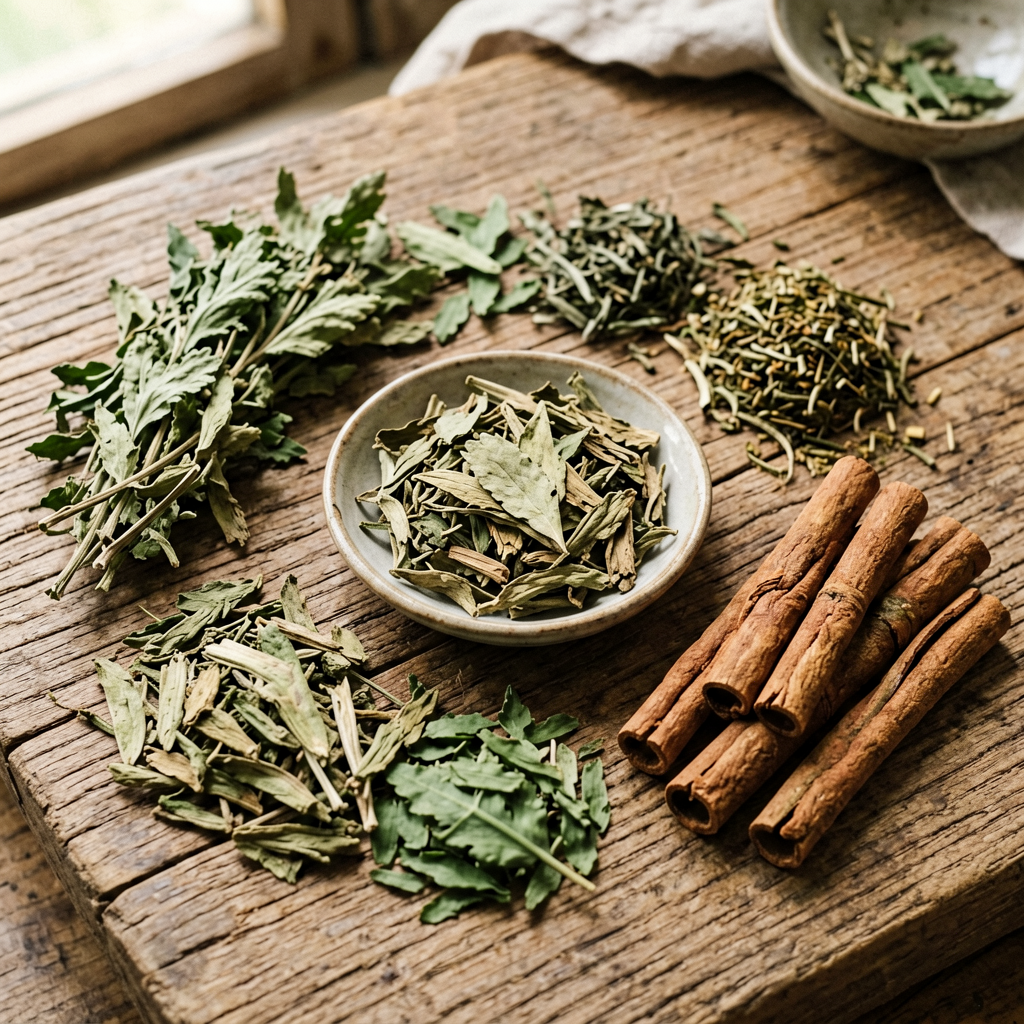
Aromatic therapy in TCM is not merely pleasant — it is medicinal. The following incense protocols are designed to support the specific cardiac patterns described above.
Blood Stasis Pattern: Frankincense and Myrrh Incense
Frankincense (乳香) enters the Heart, Liver, and Spleen meridians. It invigorates blood, moves Qi, and reduces swelling. Myrrh (没药) breaks blood stasis and disperses accumulations. Burned together, their synergy mirrors the classical formula Ru Mo San (乳没散).
Protocol: Burn 1 stick of CENISY frankincense-myrrh blend in the evening (7:00 — 9:00 PM) to promote blood circulation before sleep. For acute chest tightness, inhale the smoke deeply for 3-5 breaths while resting.
📎 Further reading: Frankincense & Myrrh: Clinical Benefits from Ancient Medicine to Modern Science
Yang Deficiency Pattern: Agarwood Incense
Agarwood (沉香) is warm, acrid, and sinking — it enters the Kidney meridian and assists the Kidney in "grasping" Qi. For Yang-deficient patients presenting with palpitations and cold extremities, agarwood's sinking nature grounds rebellious Qi.
Protocol: Burn 1 stick of CENISY agarwood incense during the afternoon (3:00 — 5:00 PM) to warm the Kidney Yang and prepare the body for the Yin hours. The grounding effect supports the Heart by ensuring Lung Qi descends properly.
📎 Context: See our Complete Guide to Agarwood (Chen Xiang) for grading, TCM properties, and pharmacological evidence.
Phlegm Obstruction Pattern: Sandalwood Incense
Sandalwood (檀香) enters the Heart, Lung, Spleen, and Stomach meridians. It moves Qi, warms the middle burner, and — crucially — dries dampness. For the phlegm-obstruction pattern, sandalwood's aromatic, drying quality cuts through turbid phlegm in the chest.
Protocol: Burn 1 stick of CENISY sandalwood incense in the morning (7:00 — 9:00 AM) to coincide with the phlegm-aggravating window. Combine with gentle abdominal breathing for 5 minutes to assist the Spleen in transforming phlegm.
Shen Disturbance Pattern: Agarwood + Sandalwood Blend
When insomnia and anxiety accompany cardiac symptoms — regardless of the underlying pattern — a calming Shen-soothing incense blend is indicated.
Protocol: Burn CENISY agarwood-sandalwood blend 30 minutes before bed (9:00 — 10:00 PM). The agarwood grounds Qi, the sandalwood calms the Shen, and together they prepare the Heart for restful sleep. A 2017 study on sandalwood essential oil inhalation showed a 23% reduction in salivary cortisol and significant improvement in sleep quality [Source: Komori et al., Journal of Physiological Anthropology, 2017, 36: 30].
Modern Research on TCM Cardiovascular Approaches
Dan Shen (Salvia miltiorrhiza) in Coronary Artery Disease
Dan Shen (丹参) is the single most studied Chinese herb for cardiovascular disease. A 2022 meta-analysis of 42 randomized controlled trials (5,128 patients) found that Dan Shen preparations significantly improved angina symptoms (RR 1.34, 95% CI 1.22-1.47) and reduced the incidence of major adverse cardiac events by 41% compared to conventional therapy alone [Source: Feng et al., Frontiers in Pharmacology, 2022, 13: 893127].
Zhen Wu Tang in Chronic Heart Failure
A 2020 systematic review of Zhen Wu Tang (真武汤) for chronic heart failure included 18 RCTs with 1,624 patients. The formula improved left ventricular ejection fraction (LVEF) by a mean of 7.2% (p < 0.001) and reduced brain natriuretic peptide (BNP) levels by 38% compared to standard Western therapy alone [Source: Wang et al., Evidence-Based Complementary and Alternative Medicine, 2020, 2020: 5630841].
Acupuncture for Hypertension
The 2019 multicenter SHARP trial (620 patients) demonstrated that electroacupuncture at specific acupoints (PC5, PC6, ST36, ST37) reduced systolic blood pressure by a mean of 6.1 mmHg at 12 weeks in patients with mild-to-moderate hypertension — an effect comparable to single-drug antihypertensive therapy without the side-effect burden [Source: Li et al., Journal of the American College of Cardiology, 2019, 73(9): 1539-1549].
Time-Based Medicine (Chronotherapy)
Modern chronobiology is catching up to what TCM organ-clock theory described 2,000 years ago. A 2023 review in Nature Reviews Cardiology confirmed that cardiovascular events follow a pronounced circadian rhythm — with myocardial infarction risk peaking between 6:00 AM and 12:00 PM, and blood pressure dipping predictably during sleep [Source: Thosar et al., Nature Reviews Cardiology, 2023, 20: 373-385]. The TCM organ clock maps these same patterns to specific meridian imbalances.
📎 CENISY's position: We view TCM and modern medicine as complementary frameworks. The information above is educational and should not replace consultation with a qualified healthcare provider. Always consult your physician before changing any cardiac medication regimen.

FAQ
Can TCM replace my heart medication?
No. TCM approaches are complementary to, not a replacement for, conventional cardiology care. Patients taking cardiac medication should never discontinue or alter their dosage without physician supervision. TCM can support heart health by addressing underlying patterns that conventional medicine may not fully address.
Which incense is best for heart palpitations?
Agarwood (沉香) is the most directly indicated incense for palpitations — particularly those accompanied by cold extremities or shortness of breath. Its warm, sinking nature calms rebellious Qi and supports the Kidney in grasping Qi. For palpitations with anxiety, a blend of agarwood and sandalwood is more appropriate.
How do I know which pattern I have?
The most reliable self-assessment tool is the time pattern: note when your symptoms consistently appear or worsen. A patient with chest tightness at 3:00 AM likely has a different pattern than one with palpitations at 11:00 AM. However, definitive diagnosis requires a qualified TCM practitioner who can assess your pulse, tongue, and overall presentation.
Is the TCM organ clock scientifically validated?
The specific organ-hour correspondences are not directly validated by modern science. However, the principle that physiological function follows predictable circadian rhythms is strongly supported. The 2017 Nobel Prize in Physiology or Medicine was awarded for the discovery of molecular circadian mechanisms, and the field of chronotherapy now recommends time-specific drug administration for hypertension, asthma, and cancer — echoing principles the TCM organ clock has used for two millennia.
How long does it take to see results with TCM approaches?
This depends entirely on the pattern and severity. Blood deficiency patterns often respond within 2-4 weeks of consistent herbal therapy. Yang deficiency and blood stasis patterns typically require 2-3 months of sustained treatment. Water-flooding patterns, being the most advanced, require the longest treatment duration and should always be managed under professional supervision.
References
- Feng Y, et al. "Dan Shen (Salvia miltiorrhiza) preparations for coronary artery disease: A systematic review and meta-analysis." Frontiers in Pharmacology, 2022, 13: 893127.
- Wang X, et al. "Zhen Wu Tang for chronic heart failure: A systematic review and meta-analysis." Evidence-Based Complementary and Alternative Medicine, 2020, 2020: 5630841.
- Li P, et al. "Electroacupuncture for blood pressure reduction: The SHARP multicenter trial." Journal of the American College of Cardiology, 2019, 73(9): 1539-1549.
- Thosar SS, et al. "Circadian regulation of cardiovascular function." Nature Reviews Cardiology, 2023, 20: 373-385.
- Komori T, et al. "Sandalwood essential oil inhalation reduces salivary cortisol and improves sleep quality." Journal of Physiological Anthropology, 2017, 36: 30.
- Maciocia G. The Foundations of Chinese Medicine, 3rd Edition. Elsevier, 2015. Chapters 9 (Heart), 43 (Blood Stasis).
- Bensky D, et al. Chinese Herbal Medicine: Formulas & Strategies, 2nd Edition. Eastland Press, 2009.
Disclaimer: This article is for educational purposes only and does not constitute medical advice. Always consult a qualified healthcare provider before making changes to your health regimen.