

Frequent Urination: Causes, Treatments & When It's Time to See a Doctor
TL;DR — Key Takeaways - Normal urination is 6-8 times daily and 0-1 times at night — anything more warrants investigation - Women and men have different common causes: women (UTIs, pregnancy, menopause, pelvic floor), men (prostate enlargement, BPH) - Bladder training improves symptoms in 70% of patients with overactive bladder (OAB) — it's the most effective non-drug intervention - The 10-step nocturia protocol can reduce nighttime urination significantly without medication - From a TCM perspective, frequent urination is often a pattern of Kidney Qi Deficiency — the Kidney governs the bladder's ability to hold and release urine
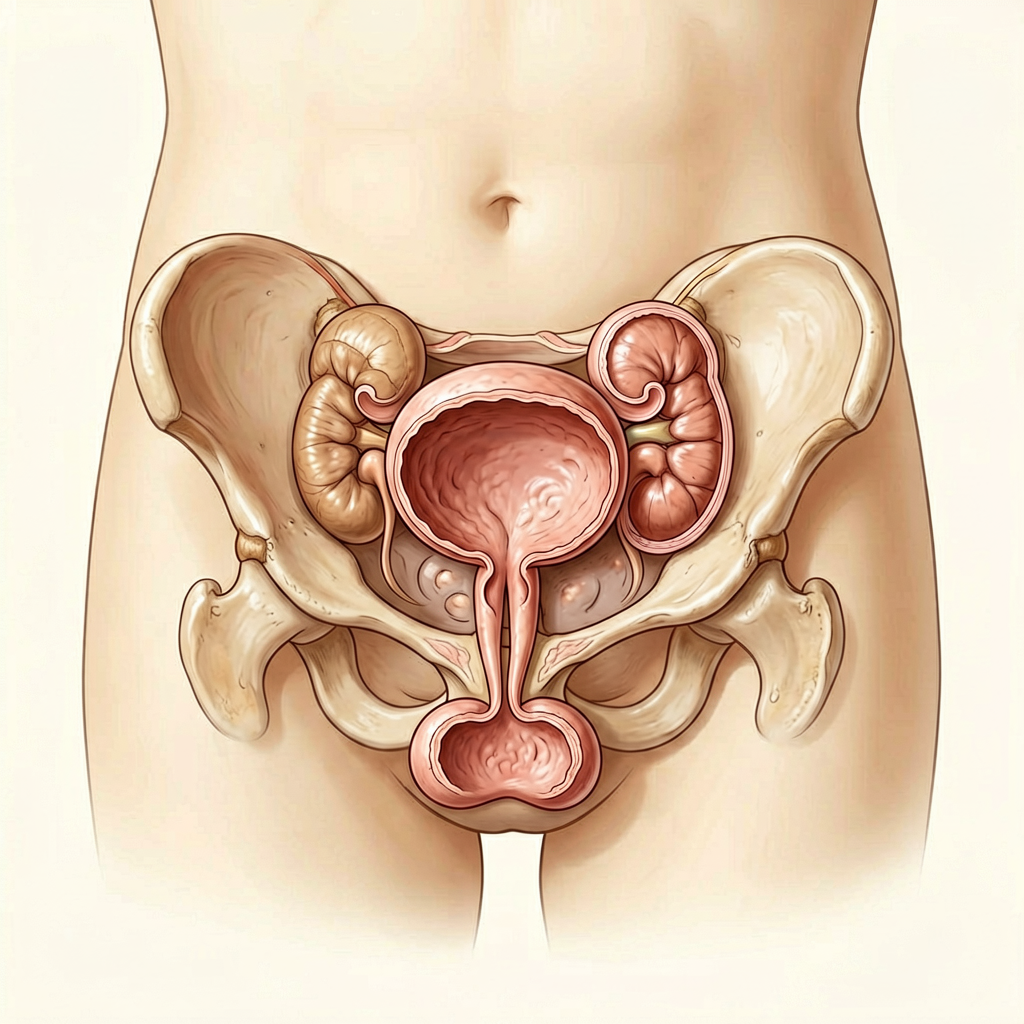
What Is "Normal" Urination? A Practical Guide
Many people worry about frequent urination without knowing what "normal" actually looks like:
| Metric | Normal Range |
|---|---|
| Daily frequency | 6-8 times per 24 hours |
| Nighttime frequency | 0-1 times per night |
| Volume per void | 300-500ml (1-2 cups) |
| Bladder capacity | 400-600ml in healthy adults |
| Time between voids | 2-4 hours during the day |
Clinical definition: Frequent urination (urinary frequency) means urinating more than 8 times in 24 hours or waking more than once per night to urinate.
Normal frequency changes with age — older adults naturally produce more urine at night due to age-related changes in the kidney's concentrating ability and hormonal shifts in ADH (antidiuretic hormone) production.
Find Your Pattern: What's Causing Your Frequent Urination?
Different patterns point to different causes:
| Pattern | Most Likely Cause |
|---|---|
| Daytime frequency only | Overactive bladder, anxiety, pelvic floor dysfunction |
| Nighttime frequency (nocturia) | Sleep apnea, nocturnal polyuria, BPH (men) |
| Both day and night | Diabetes, diuretic medications, excessive fluid intake |
| Frequency with pain/burning | UTI, interstitial cystitis, bladder stones |
| Sudden strong urge (urgency) | Overactive bladder, UTI |
| Frequent small amounts | OAB, prostate issues (men), pelvic floor (women) |
| Frequent large amounts (polyuria) | Diabetes, diabetes insipidus, excessive fluid intake |
Frequent Urination in Women: Common Causes
Urinary Tract Infection (UTI)
The most common cause of acute-onset frequency in women. UTIs cause inflammation of the bladder lining, reducing its capacity and triggering the urge reflex. Typically accompanied by burning and discomfort.
Pregnancy
Frequency increases in the first trimester (hormonal changes) and third trimester (baby's head pressing on the bladder). Usually resolves after delivery.
Menopause and Estrogen Decline
Estrogen receptors are present in the bladder and urethra. Declining estrogen levels thin the tissues, making them more sensitive to irritation and reducing sphincter control.
Pelvic Floor Dysfunction
Weakened pelvic floor muscles (from childbirth, aging, or chronic straining) reduce bladder support and can trigger urgency and frequency. Pelvic floor physical therapy is highly effective.
Overactive Bladder (OAB)
Affects ~33 million Americans. The detrusor muscle contracts involuntarily, creating a sudden urge to urinate even when the bladder isn't full.
Interstitial Cystitis (Bladder Pain Syndrome)
A chronic condition characterized by bladder pressure, pain, and frequency. The bladder lining is compromised, allowing irritants to penetrate deeper tissues.
Frequent Urination in Men: Common Causes
Benign Prostatic Hyperplasia (BPH / Enlarged Prostate)
The most common cause in men over 50. The enlarged prostate compresses the urethra, making it harder to empty the bladder fully. This leads to more frequent, smaller voids — especially at night. 40-60% of men over 60 have BPH symptoms.
Prostatitis
Inflammation of the prostate (acute or chronic) causes urinary frequency along with pelvic pain and discomfort.
Overactive Bladder
Men also develop OAB, but it's underdiagnosed because symptoms are often attributed to the prostate.
Post-Prostatectomy Incontinence
Temporary or permanent urinary changes after prostate surgery require specialized management.
Note: While prostate cancer can cause urinary symptoms, it typically presents with other signs (blood in urine, unexplained weight loss, bone pain). Most frequency in men is from benign causes, but any sudden change warrants evaluation.
Frequent Urination From a TCM Perspective: The Kidney- Bladder Connection
In Traditional Chinese Medicine, urination is governed primarily by the Kidney (which provides the Qi for bladder function) and the Bladder (which stores and expels urine).
Common TCM Patterns in Frequent Urination
| TCM Pattern | Key Symptoms | Treatment Principle |
|---|---|---|
| Kidney Qi Deficiency (肾气不固) | Frequent clear urination, especially at night; lower back ache; cold sensation in the lower back | Strengthen Kidney Qi, secure the Bladder |
| Kidney Yang Deficiency (肾阳虚) | Copious pale urine, cold limbs, aversion to cold, fatigue, weak knees | Warm Kidney Yang, transform Qi |
| Spleen Qi Deficiency (中气下陷) | Weak urinary stream, sensation of incomplete emptying, bloating, fatigue | Tonify Spleen, raise Sinking Qi |
| Damp-Heat in the Lower Burner (下焦湿热) | Scanty, dark urine; burning sensation; urethral discomfort; thick yellow tongue coating | Clear Heat, drain Dampness |
TCM-Recommended Lifestyle Adjustments
Dietary (avoid): - Cold/raw foods (weaken Kidney Yang) - Excessive salt (damages Kidney water metabolism) - Iced drinks (direct shock to the Kidney-Bladder system) - Caffeine and alcohol (consume Kidney Yin)
Dietary (increase): - Black beans, black sesame, walnuts (nourish Kidney) - Chinese yam (Huai Shan) — strengthens Spleen and Kidney - Goji berries (Gou Qi Zi) — nourishes Kidney Essence - Bone broth, slow-cooked soups (nourish Yin)
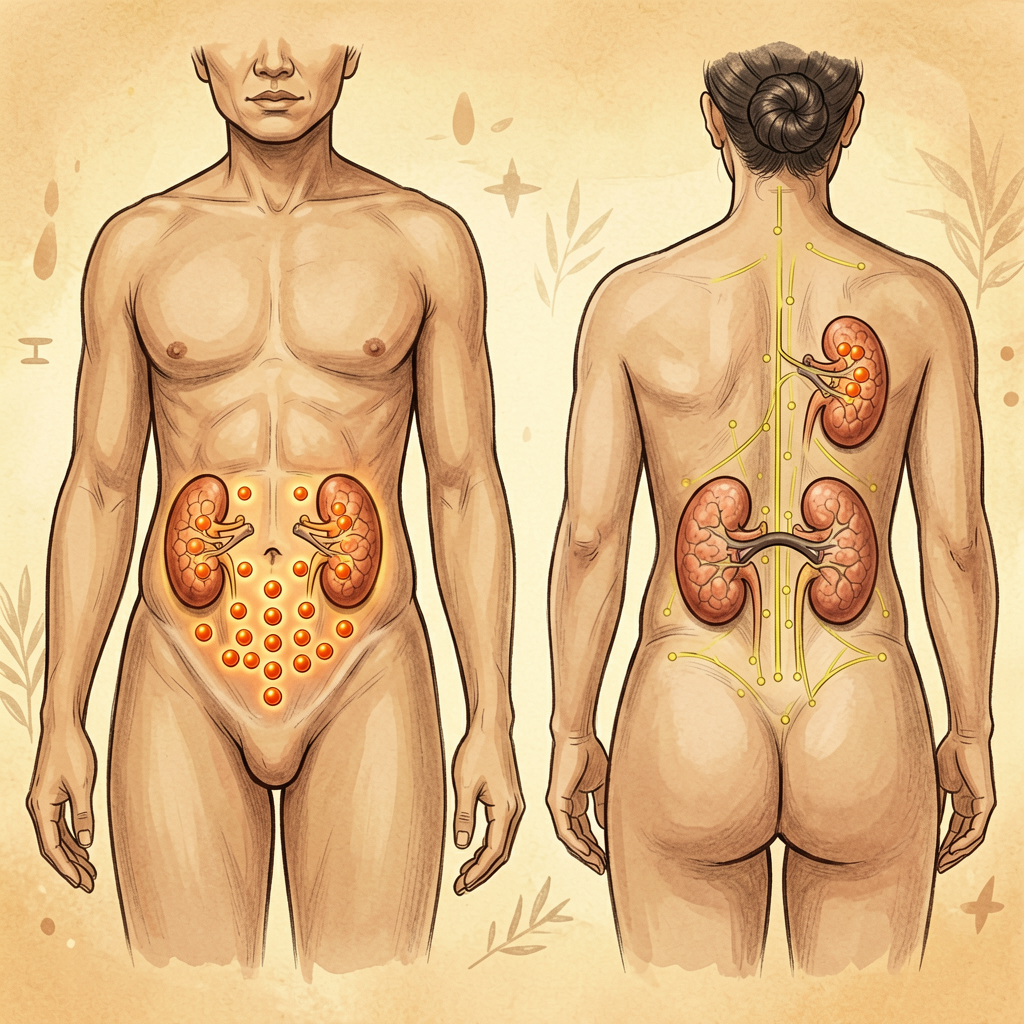
Acupressure points for daily self-care: - CV-6 (Qi Hai): 1.5 cun below the navel — strengthens overall Qi and holds urine - CV-4 (Guan Yuan): 2 cun below the navel — tonifies Kidney Yang - KI-3 (Tai Xi): Behind the inner ankle — master point for Kidney deficiency - SP-6 (San Yin Jiao): 3 cun above the inner ankle — regulates the Lower Burner - BL-23 (Shen Shu): On the lower back, 1.5 cun from the spine — direct Kidney tonification
The Role of Aromatherapy in Bladder and Urinary Health
While aromatherapy cannot directly treat urinary tract infections or structural issues like BPH, it plays a valuable supportive role in two key areas:
1. Stress Reduction for Anxiety-Driven Frequency
The brain-bladder connection is real — anxiety activates the sympathetic nervous system, which can trigger bladder urgency. Practices that calm the mind help regulate this connection: - Sandalwood: Traditionally used in meditation for its grounding properties - Lavender: Well-documented for reducing anxiety and improving sleep quality - Frankincense: Supports deep breathing and parasympathetic activation
2. Improved Sleep Quality for Nocturia Sufferers
Nighttime urination disrupts sleep architecture, and poor sleep worsens bladder control — creating a vicious cycle. A calming pre-bed ritual can help: - Reduces time to fall asleep after nighttime bathroom trips - Supports the body's natural ADH (antidiuretic hormone) regulation - Creates a relaxation response that reduces overall muscle tension, including pelvic floor
Gentle reminder: Aromatherapy is a complementary approach. If you experience blood in urine, pain with urination, or sudden changes in urinary patterns, see a healthcare provider first.
Nocturia — Why You Wake Up to Pee (And How to Fix It)
Nocturia (waking 2+ times per night to urinate) affects 1 in 3 adults over 30. It's not "just part of getting older" — it's often treatable.
The 4 Types of Nocturia
| Type | Mechanism | Common Cause |
|---|---|---|
| Nocturnal polyuria | Body produces too much urine at night | Sleep apnea, heart failure, excessive evening fluids |
| Global polyuria | Excess urine production 24/7 | Diabetes, diabetes insipidus |
| Reduced bladder capacity | Bladder can't hold as much | OAB, BPH, UTI, interstitial cystitis |
| Mixed | Combination of above | Most common in older adults |
The 10-Step Nocturia Reduction Protocol
- Stop fluids 2-3 hours before bed — water, tea, and all beverages
- Avoid evening triggers — no alcohol, caffeine, or spicy foods after 6 PM
- Elevate legs in the evening — reduces fluid pooling in the legs that gets processed as urine at night
- Double void before bed — pee, wait 30 seconds, pee again to empty fully
- Compression stockings — if you have leg swelling or varicose veins
- Check for sleep apnea — if you snore + wake up frequently to pee, this is the most likely cause
- Review medications — diuretics, SSRIs, and calcium channel blockers can cause nocturia
- Evening exercise — gentle walking improves circulation and fluid distribution
- Bladder training — during the day, incrementally increase time between voids
- Consult a specialist — if >2 episodes per night persist despite above measures
Treatment Options: From Lifestyle to Medicine
Lifestyle Modifications (First Line)
Bladder training: The most effective non-drug intervention — 70% of patients improve (Cochrane Review). Progress week by week:
| Week | Hold Time | Technique |
|---|---|---|
| 1 | 1 hour | Urge suppression + distraction (deep breathing, math, mental focus) |
| 2 | 1.5 hours | Progressive delay by 10-15 minutes |
| 3 | 2 hours | Add Kegel exercises between voids |
| 4 | 2.5 hours | Introduce double voiding |
| 5 | 3 hours | Full day schedule maintained |
| 6+ | 3-4 hours | Maintenance, add pelvic floor strengthening |
Pelvic floor exercises (Kegels): Effective for both women and men. Contract pelvic floor for 5 seconds, relax 5 seconds. 3 sets of 10 repetitions, 3x daily.
Dietary modifications: - Reduce caffeine (bladder irritant — limit to 1 cup before noon) - Reduce alcohol (diuretic effect, increases urine production) - Avoid acidic foods (tomatoes, citrus, vinegar — especially in interstitial cystitis) - Reduce artificial sweeteners (common bladder irritant) - Maintain healthy weight (reduces bladder pressure)
Medications (With Context)
| Condition | Drug Class | Examples |
|---|---|---|
| Overactive bladder | Anticholinergics | Oxybutynin, tolterodine, solifenacin |
| Overactive bladder | Beta-3 agonists | Mirabegron, vibegron (fewer side effects) |
| Nocturia | Synthetic ADH | Desmopressin (DDAVP) |
| BPH (men) | Alpha-blockers | Tamsulosin, alfuzosin |
| BPH (men) | 5-alpha-reductase inhibitors | Finasteride, dutasteride |
Advanced Procedures
- Botox injections into the bladder (for refractory OAB)
- Sacral nerve stimulation (InterStim)
- Prostate surgery (TURP, Urolift, Rezum — for BPH)
Red Flags — When to See a Doctor
Seek medical attention if you experience: - Blood in urine - Pain or burning with urination - Sudden change in urinary pattern - Persistent sensation of incomplete emptying - Fever, back pain, or unexplained weight loss - New incontinence in men
Frequently Asked Questions
How many times a day should you pee?
Normal is 6-8 times per day. Up to 10 may be normal depending on fluid intake. More than 10 times per day merits investigation.
Can anxiety cause frequent urination?
Yes — the brain-bladder connection is well-documented. Stress activates the sympathetic nervous system, which can trigger bladder urgency. Managing anxiety often improves urinary symptoms.
Is frequent urination a sign of diabetes?
Yes — it's one of the most common early signs of both Type 1 and Type 2 diabetes. Excessive thirst (polydipsia) with frequent urination (polyuria) is a classic diabetes presentation.
How do I stop frequent urination naturally?
Start with bladder training, pelvic floor exercises, and the 10-step nocturia protocol above. Identify and eliminate dietary triggers (caffeine, alcohol, acidic foods, artificial sweeteners).
Does drinking more water help frequent urination?
No — in fact, excessive water intake can worsen frequency. The goal is not dehydration, but smart hydration: small amounts steadily throughout the day, and no fluids 2-3 hours before bed.
Conclusion: Your Action Plan
- Track your pattern: Start a 3-day voiding diary — note time, volume, and associated symptoms
- Identify your triggers: Use the pattern guide above to narrow down your likely cause
- Start with lifestyle: Bladder training + pelvic floor exercises + dietary modifications
- Address sleep: If nocturia is your main symptom, implement the 10-step protocol
- Know when to escalate: Red flags warrant prompt medical evaluation
Medical disclaimer: This article is for educational purposes only. Consult a urologist or primary care provider for personalized medical advice.
Discover the art of mindful living with CENISY — premium incense crafted to bring balance to your daily rituals, supporting relaxation and restorative sleep.