

Eczema (Atopic Dermatitis): Complete 2025 Guide to Causes, Treatments & Natural Relief
TL;DR — Key Takeaways - Eczema affects 31.6 million Americans (10-20% of children, 3% of adults) — it's a chronic inflammatory skin condition, not just dry skin - The "soak and seal" method (moisturize within 3 minutes of bathing) reduces flare risk by up to 50% - Treatment is stepped by severity: mild (moisturizers + trigger avoidance), moderate (topical corticosteroids), severe (biologics like dupilumab, JAK inhibitors) - From a Traditional Chinese Medicine (TCM) perspective, eczema is linked to Damp-Heat in the Spleen and Lung systems — dietary and lifestyle adjustments can address the root cause - Aromatherapy and stress reduction (including quality incense) can help break the itch-scratch-anxiety cycle
What Is Eczema? Beyond "Just Dry Skin"
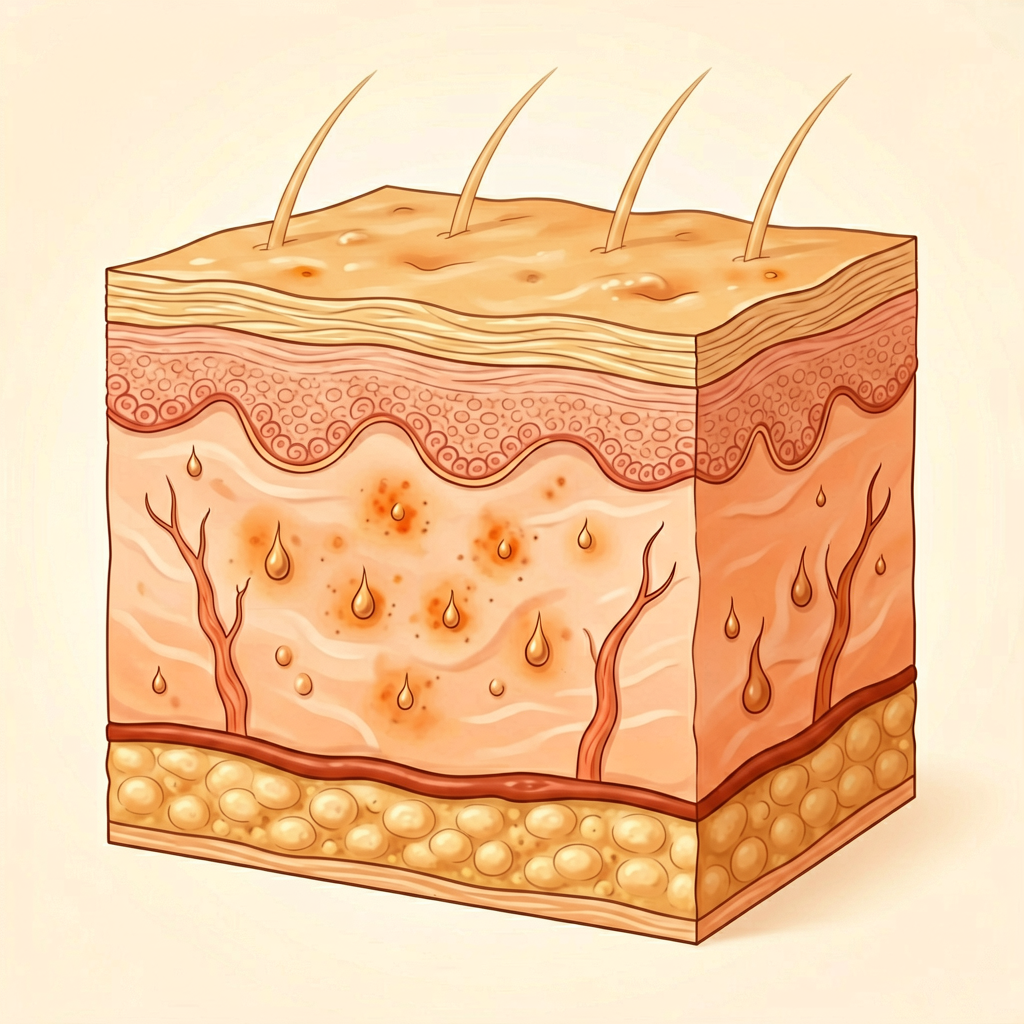
Eczema (medical term: atopic dermatitis) is a chronic inflammatory skin condition that causes dry, itchy, and inflamed skin. It's far more than simple dryness — it's an immune-mediated condition involving:
- Skin barrier dysfunction: A compromised stratum corneum allows moisture to escape and irritants to enter
- Immune system dysregulation: Overactivation of the Th2 inflammatory pathway
- Genetic factors: Filaggrin gene mutation (present in ~10% of the population) — the strongest known genetic risk factor
- Microbiome imbalance: 70-90% of eczema patients have S. aureus colonization on their skin
The "atopic march" describes how eczema often precedes other allergic conditions: eczema in infancy → food allergies → asthma → allergic rhinitis (hay fever). Up to 60% of children with eczema develop asthma or allergies later.
Eczema by the Numbers
| Statistic | Figure |
|---|---|
| Americans affected | 31.6 million |
| Children affected globally | 10-20% |
| Adults affected globally | 1-3% |
| Annual US healthcare cost | $5.3 billion |
| Patients with sleep disruption during flares | 85% |
| Flare risk reduction with twice-daily moisturizing | Up to 50% |
The 7 Types of Eczema (Not All Rashes Are the Same)
One of the biggest mistakes people make is treating all eczema the same. There are seven distinct types:
1. Atopic Dermatitis (Most Common)
The classic form, typically beginning in childhood. Presents as dry, red, itchy patches on flexural areas (inside elbows, behind knees).
2. Contact Dermatitis
Caused by direct skin contact with an irritant or allergen. Two subtypes: - Allergic contact dermatitis (poison ivy, nickel, fragrances) - Irritant contact dermatitis (harsh soaps, detergents, repeated hand washing)
3. Dyshidrotic Eczema (Pompholyx)
Small, deep-seated, itchy blisters on the hands and feet. Often triggered by stress, seasonal allergies, or damp conditions.
4. Nummular Eczema
Coin-shaped patches of irritated skin, often on the arms, back, and legs. More common in older adults and often triggered by dry winter air.
5. Seborrheic Dermatitis
Greasy, yellowish, scaly patches on the scalp, face, and chest. Caused by an inflammatory response to Malassezia yeast. Dandruff is a mild form.
6. Stasis Dermatitis
Associated with poor circulation in the lower legs. Common in older adults with varicose veins or heart conditions.
7. Neurodermatitis (Lichen Simplex Chronicus)
A localized, intensely itchy patch caused by chronic scratching or rubbing. Creates thickened, leathery skin.
What Causes Eczema? A 4-Factor Model
#1: Genetic Predisposition
The filaggrin gene mutation is the strongest known risk factor. Filaggrin is essential for skin barrier formation — without it, the skin can't hold moisture or keep irritants out.
#2: Immune System Dysregulation
In eczema, the immune system overreacts to environmental triggers, launching a Th2-dominant inflammatory response that damages the skin.
#3: Skin Barrier Dysfunction
A compromised skin barrier leads to: - Increased water loss (transepidermal water loss) - Easier penetration by allergens and irritants - Higher susceptibility to bacterial colonization (S. aureus)
#4: Environmental Triggers
Common triggers include: - Irritants: Soaps, detergents, fragrances, disinfectants - Allergens: Dust mites, pollen, pet dander, mold - Climate: Cold dry air (winter), heat and sweat (summer) - Fabrics: Wool, synthetic fibers - Stress: The #1 reported trigger for flares - Food: Dairy, eggs, peanuts, soy, wheat (in a subset of patients) - Hormones: Fluctuations during menstrual cycles or pregnancy
Eczema From a TCM Perspective: Damp-Heat and the Spleen-Lung Connection
Traditional Chinese Medicine offers a complementary framework that many patients find helpful alongside conventional treatment.
In TCM, eczema is typically classified as a Damp-Heat condition involving the Spleen and Lung organ systems:
- The Lung governs the skin and body hair (肺主皮毛) — When Lung Qi is weak, the skin loses its protective capacity
- The Spleen governs transformation and transportation (脾主运化) — When Spleen function is impaired, Dampness accumulates and "bubbles up" as skin lesions
- Heat in the Blood (血热) — Manifests as red, inflamed, itchy skin
TCM Pattern Differentiation for Eczema
| TCM Pattern | Key Symptoms | Treatment Principle |
|---|---|---|
| Damp-Heat (湿热) | Red, oozing, weeping lesions; worse in damp weather | Clear Heat, drain Dampness |
| Blood-Heat (血热) | Intense redness, severe itching, bleeding points | Cool Blood, clear Heat |
| Blood-Dryness (血燥) | Dry, thickened, scaly skin; chronic phase | Nourish Blood, moisten Dryness |
| Spleen Deficiency with Dampness (脾虚湿蕴) | Pale red lesions, digestive issues, fatigue | Strengthen Spleen, resolve Dampness |
TCM-Recommended Lifestyle Adjustments
Dietary (avoid or reduce): - Greasy, fried foods (create Dampness) - Spicy foods (generate Heat) - Dairy and raw/cold foods (weaken Spleen) - Excessive sugar (feeds Damp-Heat)
Dietary (increase): - Mung beans, barley, winter melon (clear Damp-Heat) - Pumpkin, yam, millet (strengthen Spleen) - Leafy greens, cucumber (cool Blood) - Bone broth, well-cooked soups (nourish Yin)
Mind-Body: - Stress is a major trigger — practices that calm the Shen (Spirit) are essential - Quality sleep is when the body repairs the skin barrier - Gentle movement (qi gong, tai chi, walking) supports Qi circulation without overheating the body
The Role of Aromatherapy in Eczema Management
For readers exploring holistic approaches, aromatherapy offers a drug-free way to address two critical aspects of eczema:
1. Stress Reduction (Breaking the Itch-Scratch Cycle) The itch-scratch-anxiety loop is one of the hardest aspects of eczema. Certain aromas have demonstrated calming effects on the nervous system: - Sandalwood: Known in TCM for its calming Shen properties - Lavender: Well-studied for sleep improvement and anxiety reduction - Frankincense: Traditionally used for inflammatory skin conditions and meditation
2. Sleep Support Nighttime itching is one of the most common complaints — 85% of patients report sleep disruption during flares. A calming pre-bed aromatherapy ritual with quality incense can support the body's natural repair cycle.
Note on topical use: Always exercise caution with essential oils on eczema-prone skin. Incense (inhaled aromatherapy) is generally safer than topical application for sensitive skin.
Eczema Treatment: A Step-by-Step Protocol by Severity
Mild Eczema (Occasional Dry Patches)
Step 1: Identify and avoid triggers Step 2: Implement the "soak and seal" moisturizing protocol (see below) Step 3: Short-term OTC hydrocortisone (1%, max 7 days) Step 4: Barrier repair creams with ceramides
Moderate Eczema (Frequent Flares, Visible Rash)
Step 1: All of the above Step 2: Prescription topical corticosteroids (potency matched to body area) Step 3: Topical calcineurin inhibitors (tacrolimus, pimecrolimus) — steroid-sparing Step 4: Wet wrap therapy for acute flares Step 5: Antihistamines for nighttime itching
Severe Eczema (Widespread, Refractory)
Step 1: All of the above Step 2: Phototherapy (narrowband UVB) Step 3: Systemic immunosuppressants (methotrexate, cyclosporine) Step 4: Biologics — dupilumab (Dupixent) showed 75% reduction in severity Step 5: JAK inhibitors — upadacitinib (Rinvoq) and abrocitinib (Cibinqo) — achieved ~70% EASI-75 at 16 weeks (2024 data)
The "Soak and Seal" Moisturizing Protocol
This is the single most effective non-drug intervention for eczema:
- Lukewarm bath: 5-10 minutes (not hot — heat triggers itching)
- Gentle cleansing: Non-soap, fragrance-free cleanser only
- Pat dry: Do not rub — leave skin slightly damp
- Apply medication (if prescribed): Within 3 minutes of drying
- Moisturize: Within 3 minutes — this is the "golden window" when absorption is maximized
Moisturizer ingredients to look for: - Ceramides (repair the skin barrier) - Glycerin (humectant) - Petrolatum (occlusive) - Shea butter - Niacinamide
Ingredients to avoid: - Fragrance and essential oils (common contact allergens) - Alcohol (drying) - Lanolin (allergenic for some) - Sodium lauryl sulfate (SLS)
Key evidence: Twice-daily moisturizing reduces flare risk by 50% in children (British Journal of Dermatology).
10 Science-Backed Natural Eczema Remedies (Evidence Ranked)
Tier 1: Strongest Evidence (Multiple RCTs)
| Remedy | How It Works | Protocol |
|---|---|---|
| Bleach baths | Reduces S. aureus colonization | 1/4 cup household bleach in full bath, 5-10 min, 2x/week |
| Virgin coconut oil | Antibacterial + barrier repair | Apply after bathing, 2-3x daily |
| Colloidal oatmeal baths | Anti-inflammatory, soothes itching | As directed, 15-20 min soak |
| Wet wrap therapy | Enhances penetration, cools skin | Apply moisturizer + wet layer + dry layer, leave overnight |
Tier 2: Good Evidence (Single RCT or Cohort Studies)
| Remedy | How It Works | Protocol |
|---|---|---|
| Sunflower seed oil | Linoleic acid for barrier repair (superior to olive oil) | Apply 1-2x daily after bathing |
| Shea butter | Moisturizing + anti-inflammatory triterpenes | Apply liberally, 2-3x daily, especially after bathing |
| Vitamin D supplementation | Immune modulation; deficiency correlates with severity | 1000-4000 IU daily (test levels first) |
| Probiotics | Gut-skin axis modulation | Specific strains: L. rhamnosus GG, B. lactis |
Tier 3: Limited or Conflicting Evidence
- Evening primrose oil
- Apple cider vinegar (risk of chemical burns on compromised skin)
- Manuka honey (medical-grade only)
- Tea tree oil (must be heavily diluted — risk of irritation)
Eczema and Mental Health: Breaking the Itch-Scratch Cycle
The emotional toll of eczema is often overlooked. The itch-scratch-anxiety loop works like this:
Itch → Scratch → Skin damage → Inflammation → More itch → Anxiety → More scratching
Breaking this cycle requires both physical and psychological approaches:
CBT-based strategies: - Habit reversal: Identify scratching triggers and replace with a non-damaging alternative (pressing, tapping, cold compress) - Mindfulness: Observe the itch without reacting — sit with the sensation for 30 seconds before deciding to scratch - Progressive relaxation: Reduces baseline anxiety, which lowers itch perception
Sleep hygiene for eczema: - Cool bedroom (60-67°F / 15-19°C) - Cotton or bamboo bedding (avoid wool and synthetic) - Humidifier in dry climates - Evening aromatherapy with calming incense
Support resources: - National Eczema Association (nationaleczema.org) - ItchSupport (itchsupport.com) - Online eczema communities for peer support
Frequently Asked Questions
Is eczema contagious?
No. Eczema is an inflammatory condition, not an infection. You cannot "catch" it from someone else. (However, secondary bacterial infections like staph can be contagious separately.)
Can eczema go away on its own?
Many children outgrow eczema by adolescence, but it can persist or recur in adulthood. Adult-onset eczema is increasingly common.
Does stress cause eczema?
Stress doesn't "cause" eczema, but it's the #1 reported trigger for flares. Cortisol dysregulation worsens inflammation and weakens the skin barrier.
Is eczema an autoimmune disease?
It's inflammatory and immune-mediated but not classified as an autoimmune disease. However, there is significant overlap (eczema patients have higher rates of autoimmune conditions).
Is it safe to use steroid cream every day?
Daily use of mild steroids (hydrocortisone) is generally safe short-term (1-2 weeks). Prolonged daily use of potent steroids carries risks including skin thinning, and can lead to topical steroid withdrawal (TSW). Always follow your doctor's guidance.
What's the best soap for eczema?
Fragrance-free, dye-free, non-soap cleansers. Look for "syndet" (synthetic detergent) bars or liquids formulated for sensitive skin. Avoid antibacterial soaps (they strip the skin barrier).
Conclusion: Your Eczema Action Plan
- Know your type: Use the descriptions above to identify your eczema type — treatment varies significantly
- Master the basics: The "soak and seal" moisturizing protocol is your foundation
- Identify triggers: Keep a symptom diary for 2-3 weeks to pinpoint your personal triggers
- Match treatment to severity: Mild, moderate, and severe eczema require different approaches
- Address the whole person: Eczema is connected to stress, sleep, and diet — a holistic approach (including TCM principles and aromatherapy) can significantly improve outcomes
Medical disclaimer: This article is for educational purposes only. Always consult a dermatologist for personalized medical advice, especially before starting new treatments or if symptoms worsen.
Want to learn more about how aromatherapy and traditional wellness practices can support your skin health journey? Explore CENISY's collection of premium incense, crafted using time-honored techniques to bring balance to your daily rituals.