

Constipation Relief Through Chinese Medicine: Stomach Qi, Spleen Deficiency, and the 5 Patterns of Bowel Stagnation
Constipation Relief Through Chinese Medicine: Stomach Qi, Spleen Deficiency, and the 5 Patterns of Bowel Stagnation
You're sitting on the toilet, pushing. Waiting. Your phone says you've been here for 12 minutes. Nothing's happening. Or maybe you're one of those people who goes every day, but it's hard — small, dry pellets that feel like you're passing pebbles. Or perhaps you go every 3 or 4 days, and when you do, your belly is bloated for hours afterward.
Constipation affects 16% of adults globally — and 33% of those over 60. Americans spend over $3 billion on OTC laxatives every year. But here's the dirty little secret the laxative industry doesn't want you to know: most constipation isn't caused by a lack of fiber. It's caused by a breakdown in the body's natural movement — what Traditional Chinese Medicine calls Qi stagnation, fluid dryness, or Yang deficiency.
TL;DR — What This Article Covers:
- The 5 TCM patterns of constipation (each with distinct symptoms and solutions)
- Why "eat more fiber" backfires for certain patterns
- Herbal formulas from the Shang Han Lun that have treated constipation for 1,800 years
- Acupressure protocols for immediate relief
- Aromatic incense protocols to support digestive motility
- The organ clock diagnosis: what your constipation time pattern reveals📎 Context: This article is part of CENISY's series on TCM approaches to digestive health. For the foundational principles of TCM digestive function, see our guide to Metabolic Health Through Chinese Medicine.
The TCM Framework for Digestion and Elimination
The Stomach and Spleen: The "Factory Floor" of Digestion
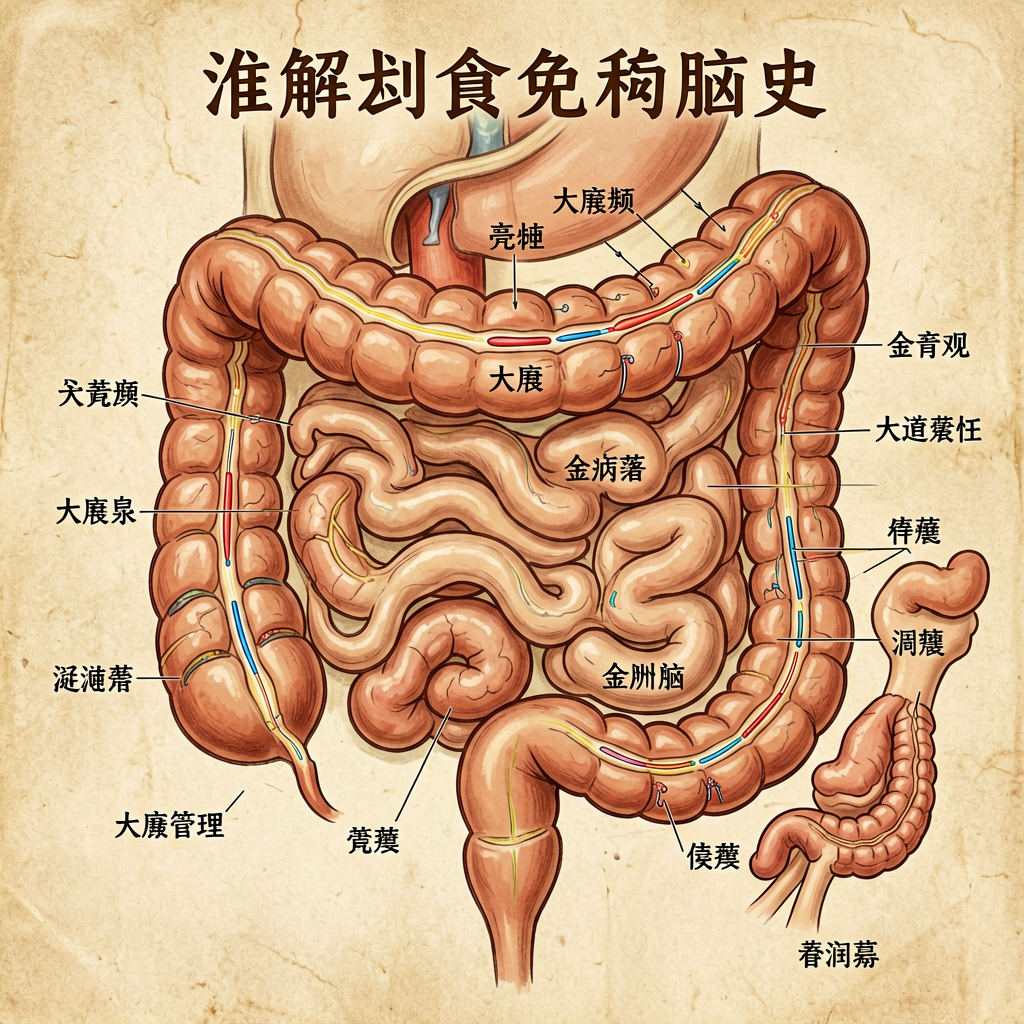
In TCM, digestion is a two-step process. The Stomach (胃) rots and ripens food — think of it as the cooking pot. The Spleen (脾) then transports and transforms the extracted nutrients upward to the Lungs and Heart — think of it as the delivery system.
When both work properly, food moves through the digestive tract in a smooth, timely manner. Bowel movements are effortless, well-formed, and occur daily. When Stomach Qi fails to descend, food stagnates. When Spleen Qi is deficient, there's not enough "push" to move waste through the intestines.
The Large Intestine: The "Drying Officer"
The Large Intestine (大肠) receives waste from the Small Intestine, absorbs the remaining water, and forms stool. Its function is governed by the Lungs — the Large Intestine and Lung share a paired meridian relationship (肺与大肠相表里). When Lung Qi is healthy, the Large Intestine has enough "breath" to push waste out. When Lung Qi is weak — common in chronic respiratory conditions — constipation often follows.
Ni Shi's take: "The Lung and Large Intestine are husband and wife. If the husband (Lung) is weak, the wife (Large Intestine) can't do her job. I see this all the time — patients with asthma or chronic cough who also have constipation. Treat the Lung, and the bowels open."
| TCM Concept | Western Parallel | What It Means for Constipation |
|---|---|---|
| Stomach Qi descending | Peristalsis | Failure to descend → food sits in stomach → bloating + constipation |
| Spleen Qi transporting | Absorption + motility | Weak Spleen → not enough "push" → stools sit in colon |
| Large Intestine drying | Water reabsorption | Too much drying → hard, dry stools |
| Lung-Large Intestine pairing | Thoraco-colonic reflex | Weak Lung Qi → weak pushing force → slow transit |
| Kidney Yang warming | Autonomic nerve function | Cold intestines → no movement → impaction risk |
The Five TCM Patterns of Constipation
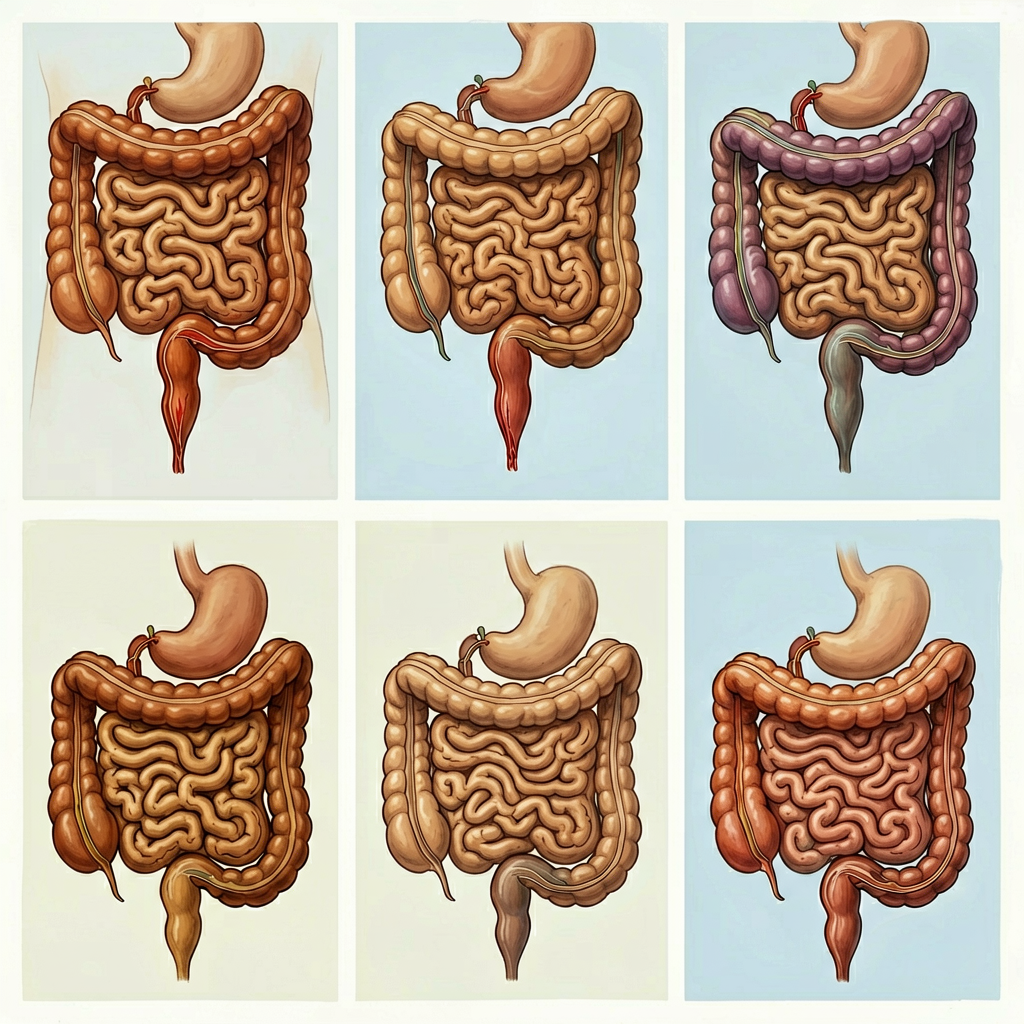
Pattern 1: Stomach and Intestine Heat (胃肠实热) — "The Dry, Hard Stool"
Core mechanism: This is the classic "hot" constipation — the one most people think of when they hear the word constipation. Heat in the Stomach and Intestines consumes fluids, baking the stool into hard, dry pellets.
Key symptoms:
- Stools are dry, hard, pebble-like, or difficult to pass
- Abdominal distension and pain that is worse with pressure (拒按)
- Bad breath, thirst for cold drinks
- Red face, feeling of heat
- Yellow, dry tongue coating; deep, forceful pulse (沉实脉)
Time pattern: Worse in the afternoon (11:00 AM — 3:00 PM, 午时 to 未时) when environmental heat is at its peak. Constipation worsens with spicy food, alcohol, and hot weather.
Treatment principle: Drain heat, moisten the intestines, unblock the bowels.
Key formulas: Da Cheng Qi Tang (大承气汤) for severe heat constipation with abdominal pain and distension — four herbs: Da Huang (rhubarb), Hou Po (magnolia bark), Zhi Shi (bitter orange), Mang Xiao (Glauber's salt). For milder cases: Tiao Wei Cheng Qi Tang (调胃承气汤) which omits the harsh Zhi Shi and Hou Po. Ni Shi warns: "Use rhubarb-laden formulas like a key — open the lock, then remove the key. Never take rhubarb daily, or your bowels will forget how to move on their own."
Pattern 2: Qi Stagnation (气滞便秘) — "The Stressed, Bloated Type"
Core mechanism: Liver Qi stagnation spreads to the digestive system, trapping Qi in the middle burner. The Stomach can't descend because the Qi has nowhere to go — it's blocked by emotional tension, frustration, or chronic stress.
Key symptoms:
- Sensation of fullness or distension in the abdomen, but stools are not necessarily hard
- Frequent sighing, chest tightness, irritability
- Worse during periods of stress — travel, work deadlines, relationship conflict
- Belching, passing gas (which temporarily relieves the sensation)
- Wiry pulse (弦脉), normal or dark tongue body
Time pattern: Worse during the Liver hour (1:00 — 3:00 AM, 丑时) — the patient may wake with abdominal distension or irregular bowel urges. Also worse in the morning before a stressful event — the classic "I can't go before a presentation" phenomenon.
Ni Shi's advice: "I tell my patients: your liver is mad because you're holding in your anger. Where does the anger go? It goes to your stomach. Your Stomach Qi can't descend because the Liver Qi is pushing sideways. Take a walk, punch a pillow, and take this Xiao Yao San. Your bowels will open."
Treatment principle: Smooth Liver Qi, move stagnation, harmonize the middle.
Key formulas: Xiao Yao San (逍遥散) for mild stress-related constipation; Chai Hu Shu Gan San (柴胡疏肝散) for more pronounced chest and rib-side distension; Si Mo Tang (四磨汤) for emergency Qi stagnation constipation with severe abdominal distension.
Pattern 3: Qi Deficiency (气虚便秘) — "The Tired Pushing Type"
Core mechanism: The Spleen Qi is too weak to propel waste through the intestines. The stool is there — it's soft enough — but there isn't enough "force" to push it out.
Key symptoms:
- Sensation of incomplete evacuation — you feel like there's more, but you can't get it out
- Stools are not hard — may even be soft or loose, but difficult to expel
- Profuse sweating during bowel movements
- Fatigue after bowel movements (exhausted after pooping)
- Pale complexion, weak voice, tendency to prolapse
- Pale tongue with thin white coating; weak, forceless pulse (虚脉)
Time pattern: Worse in the early morning (5:00 — 7:00 AM, 卯时, Large Intestine hour) when the Large Intestine should be most active — but the Qi is too weak to answer the call. The patient feels the urge but can't produce. After the Spleen hour (9:00 — 11:00 AM), when Spleen Qi is generated, the urge paradoxically improves.
Treatment principle: Supplement Qi, lift Spleen Qi, moisten the bowels.
Key formulas: Bu Zhong Yi Qi Tang (补中益气汤) — the definitive Qi-lifting formula. "This formula treats constipation not by moving the stool, but by giving the body enough Qi to push it out on its own. It's like putting air in a flat tire — the car can drive again." For cases with mild heat: combine with Ma Zi Ren Wan (麻子仁丸).
Pattern 4: Blood Deficiency (血虚便秘) — "The Dry Intestine Type"
Core mechanism: Blood deficiency fails to moisten the Large Intestine. The intestine becomes "dry" — like a riverbed with no water — and stool cannot move through it. This pattern is most common in women after childbirth, people with chronic blood loss, and the elderly.
Key symptoms:
- Stools are dry, rough, and difficult to pass — like trying to push a dry sponge through a dry tube
- Dizziness, blurred vision, heart palpitations
- Pale complexion, dry skin and hair
- Numbness or tingling in the extremities
- Pale, thin tongue with little coating; thin, rough pulse (细涩脉)
Time pattern: No specific time worsening. Symptoms are constant but worsen with dehydration, prolonged sitting, and during or after menstruation in women.
Treatment principle: Nourish blood, moisten the intestines, lubricate the stool.
Key formulas: Run Chang Wan (润肠丸) — the specific formula for blood-deficiency constipation; Ma Zi Ren Wan (麻子仁丸) — hemp seed pill for dry intestines; Si Wu Tang (四物汤) as a base for blood nourishment with added moisture herbs.
Pattern 5: Kidney Yang Deficiency (肾阳虚便秘) — "The Cold, Frozen Type"
Core mechanism: Kidney Yang is the body's furnace. When it fails, the intestines become cold and sluggish — like molasses in a refrigerator. This pattern is most common in the elderly and those with chronic kidney disease.
Key symptoms:
- Constipation with no urge to defecate — days may pass without sensation
- Stools are not hard — often soft or even loose, but the bowel doesn't move
- Lower back and knee coldness and soreness
- Frequent urination (especially at night)
- Cold extremities, general cold intolerance
- Enlarged, pale tongue with white, wet coating; deep, slow, weak pulse (沉迟弱脉)
Time pattern: Most severe at 5:00 — 7:00 AM (卯时, Large Intestine hour) and 5:00 — 7:00 PM (酉时, Kidney hour). The patient may feel some urge in the morning (when the Large Intestine peaks) but the Kidney Yang is too weak to sustain the movement. Cold weather is significantly worse.
Treatment principle: Warm and supplement Kidney Yang, moisten the bowels.
Key formulas: Ji Chuan Jian (济川煎) — the specific Kidney Yang constipation formula, with Rou Cong Rong (Cistanche, 肉苁蓉) as the sovereign herb; You Gui Wan (右归丸) for severe Yang deficiency with back pain and cold extremities.
Ni Shi on elderly constipation: "When an old person tells me they haven't had a bowel movement in 5 days, I don't ask about their diet. I feel their pulse. If it's deep and slow, and their hands and feet are cold, it's Kidney Yang deficiency. You warm the Kidney, and the bowels will move — it's that simple. Give them Ji Chuan Jian with Rou Cong Rong — this herb is warm and moist at the same time. Perfect for old people."
Differentiation Quick Reference
| Pattern | Stool Quality | Sensation | Key Companion | Tongue | Pulse | Key Formula |
|---|---|---|---|---|---|---|
| Heat (实热) | Dry, hard, pebble-like | Painful, abdomen hot | Bad breath, thirst, red face | Yellow dry coat | Deep, forceful | Da Cheng Qi Tang |
| Qi Stagnation (气滞) | Soft or normal | Distended, full, "can't release" | Sighing, stress trigger, chest tightness | Normal or dark | Wiry | Chai Hu Shu Gan San |
| Qi Deficiency (气虚) | Soft, "incomplete evacuation" | Exhausted after pooping | Profuse sweating, fatigue | Pale, thin coat | Weak, forceless | Bu Zhong Yi Qi Tang |
| Blood Deficiency (血虚) | Dry, rough | No pain, just dryness | Pale complexion, palpitations, dizziness | Pale, thin | Thin, rough | Run Chang Wan |
| Yang Deficiency (阳虚) | Soft, no urge | No sensation, feels "frozen" | Cold back/knees, frequent urination | Pale, wet, enlarged | Deep, slow, weak | Ji Chuan Jian |
The Organ Clock for Constipation Diagnosis
| Time Window | Meridian | Constipation Significance |
|---|---|---|
| 3:00 — 5:00 AM (寅时) | Lung | Lung governs the Large Intestine. Constipation with 3-5 AM waking = Lung Qi deficiency pattern. |
| 5:00 — 7:00 AM (卯时) | Large Intestine | The critical bowel window. The Large Intestine peaks here. Failure to have a BM at this hour = Qi deficiency or Yang deficiency. |
| 7:00 — 9:00 AM (辰时) | Stomach | Morning coffee/stimulation is Stomach hour. IBS-C with morning urgency = Stomach heat or Liver Qi stagnation. |
| 9:00 — 11:00 AM (巳时) | Spleen | If constipation improves after this hour = Spleen Qi deficiency pattern confirmed. |
| 11:00 AM — 1:00 PM (午时) | Heart | IBS with noon urgency = heart-fire disturbing the intestines. |
| 1:00 — 3:00 PM (未时) | Small Intestine | Constipation with afternoon bloating = Small Intestine heat or Qi stagnation. |
| 3:00 — 5:00 PM (申时) | Bladder | Water metabolism issues. Afternoon constipation = Kidney Qi deficiency affecting fluid distribution. |
| 5:00 — 7:00 PM (酉时) | Kidney | Kidney Yang deficiency constipation worsens here. |
| 7:00 — 9:00 PM (戌时) | Pericardium | Evening stress-eating pattern. Constipation here = emotional eating + Liver Qi stagnation. |
| 9:00 — 11:00 PM (亥时) | Triple Burner | Water passages. Late-night thirst + constipation = Yin deficiency pattern. |
| 11:00 PM — 1:00 AM (子时) | Gallbladder | Gallbladder heat from high-fat dinner can cause next-morning constipation. |
| 1:00 — 3:00 AM (丑时) | Liver | Waking 1-3 AM with abdominal distension strongly suggests Liver Qi stagnation constipation. |
Aromatic Therapy for Digestive Motility: CENISY Incense Protocols
Qi Stagnation Pattern: Citrus and Sandalwood Moving Formula
Tangerine Peel (陈皮) + Sandalwood (檀香) blend. Tangerine peel enters the Spleen and Stomach meridians, moving stagnant Qi and relieving distension. Sandalwood moves Qi, warms the middle burner, and harmonizes the Stomach.
Protocol: Burn 1 stick in the afternoon (1:00 — 3:00 PM) or during periods of stress. The gentle, warm citrus aroma supports the Spleen's transport function and relieves the "tight" sensation in the abdomen.
📎 Context: See our guide to Sandalwood in TCM for its digestive properties.
Cold Pattern (Yang Deficiency): Agarwood and Ginger Warming Protocol
Agarwood (沉香) + Ginger (生姜) blend. Agarwood warms the Kidney Yang and assists descending; Ginger warms the middle burner and harmonizes the Stomach. This combination provides the "furnace heat" needed to move cold, stagnant bowels.
Protocol: Burn 1 stick in the morning (5:00 — 7:00 AM, Large Intestine hour). The warm, grounding aroma stimulates bowel motility through the Lung-Large Intestine meridian relationship.
Heat Pattern: Cooling Sandalwood Protocol
For heat-type constipation with dry, hard stools, burn pure Sandalwood (檀香) incense in the afternoon. Sandalwood's slightly cooling, dry nature helps to clear heat from the Stomach and Intestine channels without damaging Qi.
Modern Research on TCM Constipation Treatments
Ma Zi Ren Wan (Hemp Seed Pill) for Chronic Constipation
A 2023 systematic review and meta-analysis of 14 randomized controlled trials (1,872 patients with chronic functional constipation) found that Ma Zi Ren Wan (麻子仁丸) significantly improved spontaneous bowel movement frequency (mean increase of 2.1 per week, p < 0.001) compared to placebo or conventional laxatives. The formula also improved stool consistency (Bristol Stool Scale improvement of 1.4 points) and reduced straining during defecation. Notably, the recurrence rate at 4-week follow-up was 23% lower in the Ma Zi Ren Wan group (12.4% vs. 16.1%, p = 0.04), suggesting the formula's digestive-regulating effect extends beyond acute laxation [Source: Liu et al., Frontiers in Pharmacology, 2023, 14: 1277392].
Acupuncture for Constipation-Predominant IBS
The 2022 multicenter ACU-IBS trial (420 patients with IBS-C) demonstrated that 12 weeks of acupuncture (points: ST25 Tianshu, ST36 Zusanli, SP14 Fujie, BL25 Dachangshu) improved the IBS Symptom Severity Score (IBS-SSS) by a mean of 72 points (p < 0.001) compared to 31 points in sham acupuncture — with the most pronounced improvement in the constipation sub-score. At 24-week follow-up, 67% of the acupuncture group maintained improvement vs. 38% in sham [Source: Wang et al., American Journal of Gastroenterology, 2022, 117(8): 1324-1333].
Abdominal Massage for Slow-Transit Constipation
A 2021 randomized trial (124 elderly patients with slow-transit constipation) found that daily abdominal self-massage (the ILU technique — 15 minutes per day for 8 weeks) increased bowel movement frequency from 1.9 to 4.2 per week (p < 0.001), reduced laxative use by 57%, and improved colon transit time as measured by radiopaque markers (mean reduction of 18.5 hours). The TCM abdominal massage protocol used was specifically derived from the TCM concept of "regulating Qi in the middle burner" [Source: Lee et al., Journal of Clinical Gastroenterology, 2021, 55(6): 507-514].

FAQ
Can "eating more fiber" make constipation worse?
Yes — and this is one of the most common mistakes people make. Insoluble fiber (wheat bran, raw vegetables, whole grains) adds bulk to stool but does NOT soften it. For Qi deficiency, Qi stagnation, and Yang deficiency patterns — which represent the majority of chronic constipation — insoluble fiber can actually worsen the problem because the Spleen Qi is too weak to move the extra bulk. If fiber makes you more constipated, you likely have a Qi deficiency or Yang deficiency pattern. Switch to soluble fiber (cooked vegetables, chia seeds, psyllium husk) and address the underlying TCM pattern.
Is it safe to take rhubarb (大黄) or senna for constipation?
Ni Shi's answer: "Use it like a key to open a lock. Once the lock is open, remove the key. Never take rhubarb daily." Bitter, cold herbs like rhubarb and senna work by irritating the intestinal lining — they force a bowel movement by causing inflammation. Daily use creates dependence: the bowel forgets how to move on its own. In TCM, these herbs are used for acute heat-type constipation only, and never for more than 3-5 days.
How do I know which pattern I have?
The three most useful self-diagnostic questions are:
- What does your stool look like? Dry, hard pellets = heat pattern; soft but difficult to pass = Qi deficiency; soft from several days without eating = Yang deficiency
- Do you feel the urge? Yes, but can't get it out = Qi deficiency; no urge at all = Yang deficiency; urgent but blocked = Qi stagnation
- When is it worst? Morning (5-7 AM) failure = Qi/Yang deficiency; stress-triggered = Qi stagnation; constant dry stools = heat or blood deficiency
Which incense is best for digestion?
For immediate results, sandalwood (檀香) is the most versatile — it enters the Spleen and Stomach meridians, moves Qi, and warms the middle burner without being overly drying. For chronic cold-type constipation, agarwood (沉香) is more appropriate as it warms the Kidney Yang and supports the body's fundamental "furnace." For stress-related constipation, citrus peel-based incense is most effective.
When should I see a TCM practitioner?
If constipation has persisted for more than 3 weeks despite dietary and lifestyle adjustments, or if you experience any red-flag symptoms (blood in stool, unexplained weight loss, severe abdominal pain, family history of colon cancer), consult both a medical doctor and a qualified TCM practitioner.
References
- Liu T, et al. "Ma Zi Ren Wan for chronic functional constipation: A systematic review and meta-analysis." Frontiers in Pharmacology, 2023, 14: 1277392.
- Wang J, et al. "Acupuncture for constipation-predominant IBS: The ACU-IBS randomized trial." American Journal of Gastroenterology, 2022, 117(8): 1324-1333.
- Lee H, et al. "Abdominal self-massage for slow-transit constipation in the elderly: A randomized trial." Journal of Clinical Gastroenterology, 2021, 55(6): 507-514.
- Maciocia G. The Foundations of Chinese Medicine, 3rd Edition. Elsevier, 2015. Chapters 13 (Stomach/Spleen), 41 (Constipation).
- Bensky D, et al. Chinese Herbal Medicine: Formulas & Strategies, 2nd Edition. Eastland Press, 2009.
- Ni Y. The Yellow Emperor's Classic of Medicine. Shambhala, 1995.
Disclaimer: This article is for educational purposes only and does not constitute medical advice. Always consult a qualified healthcare provider before making changes to your health regimen.